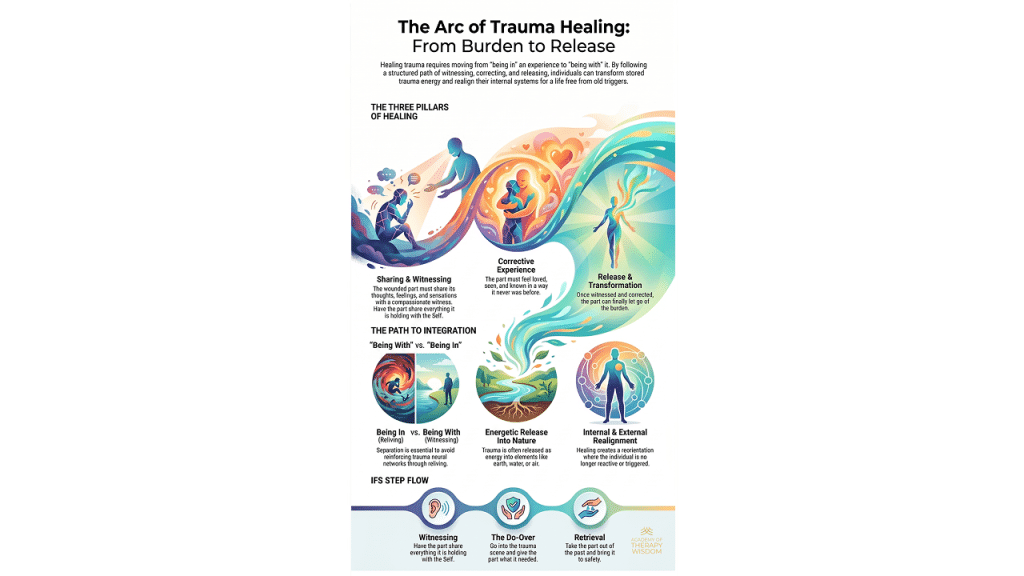


In Part 1 of this IFS therapy introduction with Frank Anderson, we learned five key principles of Internal Family Systems as talk by Frank in his new spirituality in psychology training New Dimensions of Trauma Healing: Energy, Neuroscience, and Spirituality.
The Five Foundations of Internal Family Systems with Frank Anderson:
-
We all have “parts”
-
Parts are organized around systems
- All parts have good intentions
-
Focus on the intentions, not the effects
- Parts, not diagnosis

JOIN a FREE WEBINAR TRAINING with Frank Anderson
Spiritual Therapy Techniques: Intuition in Clinical Practice
In this training, We will explore:
How to access your intuition in the therapy room so you can use it
How to differentiate what’s coming from your mind’s eye from what you are receiving from ‘beyond’
How to talk about Spirituality so your clients don’t feel like you’re imposing your personal beliefs on them.
How to incorporate your intuitive sense with non-spiritual clients
As we continue here in Part 2 of Frank´s introduction taken directly from the first part of his online course for therapists, we learn about the different types of parts and how these categories support the IFS trauma healing process.
According to Frank, when we look at the positive intention of all parts, i.e. what they are trying to accomplish for us, we find we can break them down into different categories and sub-categories.
IFS Parts Categories (Frank Anderson)
- Protectors
- Wound/pain/trauma carriers
The Two IFS Protectors as Taught by Frank Anderson are:
- Preventative protectors
- Reactive, extreme protectors
What are Protectors in IFS-informed Therapy?
Protectors are a type of inner part that act to defend us from harm or perceived harm. They often appear as a harsh and controlling figure, but their intent is to protect us from perceived threats, especially is there is a history of trauma. They may block access to other parts, or make sure we take appropriate action in certain situations. Continuing education in IFS therapy techniques can help you work with your clients´ protectors to help them find more balance and ease in their life.
What is the role of Preventative Protectors in the IFS model?
Preventative protectors play a pivotal role in the Internal Family Systems (IFS) model. They are our internal parts that work to prevent us from experiencing pain. These protectors can be anything from rationalizing our behavior to avoiding certain people or situations. They often help us to maintain our sense of safety and security, but can become destructive when we rely on them too much.
Qualities of Preventative Protectors (aka, Managers) include:
- Run our day-to-day life
- Hard working and exhausted
- Want relief
- Examples: Want to please, caretake, obsess, worry, want to look good
What are Extreme Reactive Protectors in the IFS Model?
Reactive or extreme protectors are parts of ourselves that respond to perceived threats. They can use a variety of tactics to protect us from harm, and they tend to be very intense. It can be very helpful to have them on hand during a crisis, but if overused or if their strategies are not effective, they can be problematic.
Qualities of Extreme Protectors (aka, Firefighters) include:
- Only show up once the wound has been activated
- Care about one thing and one thing only: to stop the pain
- Examples: Cutting, yelling, abusing substances, binging, purging, numbing out, dissociating, numbing, suicidal thoughts or actions.
IFS-informed methods help people develop new ways of understanding and responding to their extreme protector parts, which helps reduce their intensity and live a more peaceful, balanced life.
In Part 3 of this IFS Introduction by Frank Anderson, we´ll dive in to the wounded/trauma carriers and their good intentions.
Frank Anderson, MD, completed his residency and was a clinical instructor in psychiatry at Harvard Medical School. He is both a psychiatrist and psychotherapist. He specializes in the treatment of trauma and dissociation and is passionate about teaching brain-based psychotherapy and integrating current neuroscience knowledge with the IFS model of therapy.
Dr. Anderson is a Lead Trainer at the IFS Institute with Richard Schwartz and maintains a long affiliation with, and trains for, Bessel van der Kolk’s Trauma Center. He serves as an advisor to the International Association of Trauma Professionals (IATP) and was the former chair and director of the Foundation for Self Leadership.
Dr. Anderson has lectured extensively on the Neurobiology of PTSD and Dissociation and wrote the chapter “Who’s Taking What” Connecting Neuroscience, Psychopharmacology and Internal Family Systems for Trauma in Internal Family Systems Therapy-New Dimensions. He co-authored a chapter on “What IFS Brings to Trauma Treatment in Innovations and Elaborations in Internal Family Systems Therapy” and recently co-authored Internal Family Systems Skills Training Manual.
His most recent book, entitled “Transcending Trauma: Healing Complex PTSD with Internal Family Systems” was released on May 19, 2021. Dr. Anderson maintains a private practice in Concord, MA.