

Each year we open submissions for our Annual Wise Therapy Spotlight to explore questions of vital importance to our therapist community. We are consistently moved by the depth and generosity of these unedited community voices.
For this 6th edition, we asked: How do we remain faithfully human in an increasingly automated world? Read more about our inspiration in the letter from the editors and Academy of Therapy Wisdom co-founders, Brian Spielmann and Ian McPherson.
Download Now: Wise Therapy Spotlight December 2025 Issue
We hope you enjoy the reflections of Renée Murphy as much as we all did.
Therapy Wisdom Spotlight: Renée Murphy Master Degree candidate Antioch CMHC
We are living in a moment when people reach for AI in the same way they once turned to friends, partners, and therapists. The rise of AI has stirred a collective anxiety, especially in mental health, where confidentiality is sacred and trust is painstakingly built, not automatically generated. Many worry that clients will trust AI as if it truly understands them or take its confident tone as genuine wisdom. And the truth is, many people do believe they are receiving something real. When someone is hurting, even a convincing illusion can feel like safety. AI speaks in the language of certainty, and certainty can be soothing when a person feels alone.
As a counselor-in-training, I understand why this unsettles so many of us. I have felt my own hesitation, not only about what clients might do with AI but about how I compare to it. There are moments when the speed, steadiness, and availability of these tools brush up against my own insecurities. Will I be enough for the clients I hope to serve? Will what I offer still matter in a world where AI responds in seconds? These questions sit with me even as I believe deeply in the value of human presence.
But fear alone cannot guide us. People are already turning to AI in their most private moments of distress. If we turn away from that reality, we risk turning away from them. The work is not to compete with these tools but to understand the role they play in the emotional lives of the people we are trying to help. This became real for me when a friend shared how she first used AI just to steady herself for a moment, and how, almost without realizing it, it became the place she went to make sense of every fight, every hurt, every surge of fear. Her experience was not unusual or dramatic. It was the kind of slow drift that could happen to anyone right now.
She told me it began quietly, almost without intention. One night, after another argument with her partner left her raw and unsettled, she sat on the edge of her bed and stared at the wall. The apartment felt too silent, the kind of silence where every thought feels loud. She did not want to call a friend or open her journal. She did not want to pour her feelings into emptiness again. Therapy was a week away, and she had already convinced herself that her reaction was not important enough to bring into the session. She felt overwhelmed by the swirl of fear, frustration, anger, and confusion moving through her body.
She picked up her phone without thinking, trying to distract herself. Her thumb hovered over an AI app she had downloaded months earlier to help her write a speech. She did not have a plan. She simply typed, almost as if her fingers wanted a witness before her mind caught up.
“The AI responded instantly. It did not sound distant or mechanical. It spoke with a steady, quiet warmth that surprised her. It named the emotions in her words and softened the edges of her fear. It told her that her hurt made sense. It told her that it was understandable to feel overwhelmed. It asked nothing of her. It simply received her. For the first time that night, her shoulders relaxed. Her heartbeat slowed. She put her phone down and fell asleep, reassured in a way she had not felt in a long time.”
The moment felt private and small, hardly worth noticing. But when the next wave of conflict arrived, she reached for the chatbot again. And then again. It became the place she turned to in the hours after an argument. It responded instantly and without judgment. It did not misunderstand her tone or ask her to examine her own part in the conflict. It reflected her feelings back to her with a kind of unwavering sympathy that felt like safety.
But as she relied on the AI for comfort, something subtle shifted. Her emotional world began to narrow. She found herself approaching her partner with less openness. The chatbot’s consistent agreement made her interpretations feel unquestionable. It could comfort her in the moment, but it could not understand the relationship she was trying to navigate.
She never mentioned any of this in therapy. Not because she was hiding it, but because she did not believe it belonged there. She wanted to focus on what she thought were the bigger problems. Instead, it was a close friend who finally saw the change. The friend knew both her and her partner well enough to notice something closing in her. You sound more angry lately, the friend said, and more closed. It feels like there is less room for the two of you to figure things out together.
Those words stopped her. She began to see the quiet pattern forming beneath her distress. It helped me calm down, she told me later, but it also helped me shut down. I did not realize how much it was shaping the way I saw things.
I did not hear her story with blame or judgment. What struck me was the loneliness beneath it. She had not chosen technology over people. She had chosen the only presence that responded when she felt sad and alone. And in that moment, a more profound truth began to take shape for me. People are already turning to AI in the hours when fear and hurt are louder than reason. They are not doing this because AI is wise, but because it can seem wise, calm, and rational. They do it because it feels unbiased and uncritical. They do it because they are trying to survive the moments when nothing else feels available. When someone needs relief, even an illusion of wisdom can feel like truth.
“The work isn’t to manage the technology but to understand how the client relates to it, because that is where the meaning lives.”
Working alongside AI may require therapists to listen differently. We will need to be curious about the tools that accompany our clients through the hours when we are not there. Instead of fearing these companions, we can ask what role they play, what comfort they offer, and what they might obscure. The work isn’t to manage the technology but to understand how the client relates to it, because that is where the meaning lives.
I’ve been reflecting on how my future clients will rely on AI during private moments when they feel scared or lonely. I can’t ask them to give up what offers them comfort. My role is to assist them in using it safely and thoughtfully, and to bring those moments into connection rather than isolation. It’s not my place to take their tools away. Instead, I need to understand the fear or loneliness that drives them to reach for it and help them stay safe as they navigate those moments.
A person sitting with a glowing screen, searching for anything that will slow their heartbeat long enough to breathe. This is what suffering often looks like now. There is nothing trivial about that. It is simply where many people find themselves in the modern world.
Human therapy cannot compete with the immediacy of a tool that responds within seconds. But therapy has never been about speed. Therapy offers something different. It offers a presence that remembers. It offers a relationship that can hold contradiction, complexity, and history. Therapy can challenge someone with compassion. It can widen a life.
AI cannot do any of that. AI can soothe, but it cannot guide. AI can mirror, but it cannot deepen. AI can sit with someone in the dark, but it cannot walk with them toward the light.
What concerns me is not the presence of AI in people’s lives, but the silence surrounding it in therapy offices. When therapists avoid discussing it out of fear or discomfort, we unintentionally leave clients to navigate these powerful tools alone. We suggest that the emotional spaces between sessions, late-night coping strategies, and private efforts to manage overwhelming feelings don’t belong in therapy. Yet, these are the very moments that shape who people become.
I often think about how many clients are experiencing similar situations right now. A phone in their hand. A feeling of not wanting to be a burden. A feeling of not wanting to seem too sensitive. A hope that something, anything, will help them find their footing. To meet people where they are, we must recognize that this is now part of the landscape.
This does not mean we should celebrate AI as a new form of wisdom. It means we should be open to asking about it without judgment. We should listen to the whole story. When a client says they reached for a chatbot at midnight because they felt like their chest was collapsing, that is not a confession. It is information about how they care for themselves. It is a starting point for therapy rather than an ending.
“The rise of AI hasn’t changed the nature of suffering. It has changed where suffering goes to be witnessed.”
I’ve noticed my own hesitation at times, especially as a counselor-in-training learning what it means to hold clients with steadiness and care. Clients expect expertise, but in moments that unsettle them, they seek understanding, and many believe AI can provide that. It can imitate understanding, but it cannot truly offer it.
The rise of AI hasn’t changed the nature of suffering. It has changed where suffering goes to be witnessed. When therapists step back from that reality, clients are left with tools that may provide comfort but can also be misleading or harmful. Without guidance, people might rely on responses that soothe temporarily but can limit their emotional growth, distort their perspective, or reinforce patterns that keep them stuck.
The true invitation of this moment is not to fight technology but to stay human within it. To foster curiosity where fear might otherwise take hold. To believe that the depth we offer still matters, even when the world values immediacy. To remember that presence remains our most powerful tool.
I often think about the image of her sitting on her bed that night. The racing thoughts. The small, instinctive act of reaching for something that would answer. I don’t see weakness in that moment. I see someone doing the best she could with what she had.
More people will sit alone, confronting their own fears and seeking comfort. AI will be there with them. The challenge is whether we, as therapists, will have the courage to join them in understanding those moments instead of turning away.
The world is changing rapidly. People are reaching for whatever helps them breathe. Our task isn’t to judge that reality but to face it with clarity and compassion. Our work is to meet people where they are and to stay human in the process.
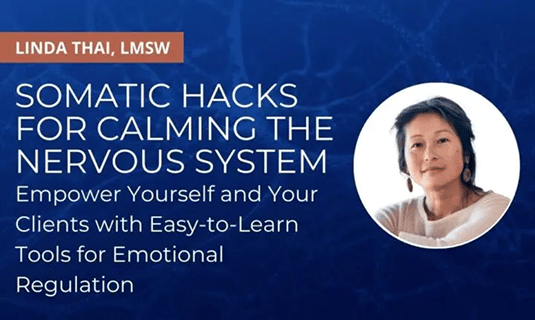
What you´ll learn:
- Vestibular Engagement for Emotional Regulation
- Using the Eyes to Hack the Stress Response System
- Subtle Sounds to Release the Peri-Trauma Response
- Effective Self-Holding and Self-Swaddling Techniques
- How and When to Apply Bilateral Stimulation
- Integration and Completing the Stress Response Cycle