
Dear friends,
Back in 1992, I attended a three-month Buddhist seminary. The rhythm was two weeks rigorous study followed by two-week stretches of silence. The principal teacher was a young Tibetan who was just starting to teach. Pema Chödrön served as a secondary teacher.
Midway through the program, the head teacher pulled Pema aside and told her it was time to take a back seat. She became disoriented. Her teaching career was rising. She was getting book deals. She was gaining recognition. Why are they asking me to now be invisible?
Wrestling with her place, she ran to the teacher and asked for clarity. He looked at her and said, “You need to learn how to be both big and small at the same time.”
I think about this often. It is one of the deeper teachings on leadership and care that I’ve come across. The best teachers are always students. The best students are also teachers. And every one of us is asked, again and again, to be big enough to bring our gifts forward and small enough to let the work be about something larger than ourselves.
As clinicians, this is the paradox at the heart of our work. You may have extraordinary skills. You have invested a lot of money in your graduate training and beyond, plus thousands of hours into study and practice. You hold profound insight. Yet the transformation belongs to the client. It is not your story that is unfolding in the room. It’s theirs.
At the same time, you are a force. You are a carrier of knowledge, presence, and experience that can open doors for another human. You matter. Your training matters. Your voice matters.
So how do we be both big and small at the same time? How do we hold our seat without being the center? How do we step forward without overshadowing the very people we aim to serve?
This is not a problem to solve. It is Koan… A way of walking. A way of caring.
And perhaps this is the deeper invitation of our field: To become the kind of practitioners who can bow and rise in the same gesture. To become people who can carry wisdom lightly. To become teachers who never stop learning and learners who understand that wisdom flows in both directions.
May we keep finding that balance together.
Warmly,
Brian
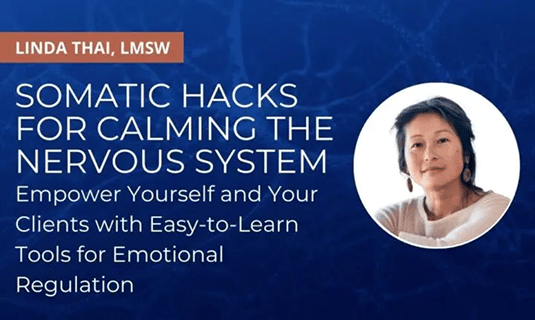
What you´ll learn:
- Vestibular Engagement for Emotional Regulation
- Using the Eyes to Hack the Stress Response System
- Subtle Sounds to Release the Peri-Trauma Response
- Effective Self-Holding and Self-Swaddling Techniques
- How and When to Apply Bilateral Stimulation
- Integration and Completing the Stress Response Cycle