


Janina Fisher, PhD, a Therapist's Guide to Her Trauma Model and TIST Training
Last Updated: .
Janina Fisher, PhD is a psychotherapist and presenter who developed Trauma-Informed Stabilization Treatment (TIST), a trauma-informed parts model for complex trauma that integrates Sensorimotor Psychotherapy, Internal Family Systems, clinical hypnosis, and cognitive restructuring. The Academy of Therapy Wisdom’s TIST Certification with Dr. Fisher teaches body regulation and compassionate work with protective parts so clinicians can reduce crises, strengthen dual awareness, restore safety and self-leadership, and prepare clients for deeper trauma processing.
Janina Fisher’s Trauma Model (TIST)
Creator:
Janina Fisher, PhD
What it is:
A trauma-informed parts model that works with the consequences of trauma (not re-exposure).
Integrates:
Sensorimotor Psychotherapy, IFS, clinical hypnosis, cognitive restructuring.
Used for:
Complex PTSD, dissociation, self-harm, addictions, suicidal ideation.
Clinical stance:
On-pathologizing; views extremes as protective responses; skills before processing; builds self-leadership.
Primary sources:
Janina Fisher official site; TIST Certification Page
TIST Training: Core principles and techniques
Parts work:
Map protector parts; respectful parts language; build internal secure attachment.
Dual awareness:
“Then vs now” cues to pair present safety with implicit emotional memories.
Somatic practice:
Grounding, orienting, posture/movement, breath regulation.
Stabilization first:
Skills and capacity before any optional memory processing.
Shame reduction:
Normalize dissociation; reframe extremes as adaptive survival responses.
Session flow:
Brief skills practice, check-ins, between-session micro-practice.
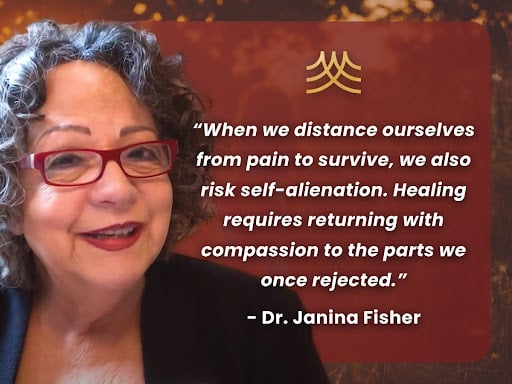
Many trauma survivors don’t respond to traditional talk therapy.
Janina Fisher, PhD, developed a new way forward.
A clinical psychologist, author, and internationally respected teacher, Dr. Fisher is known for blending neurobiology, mindfulness, and parts-informed therapy into an approach that helps clients stabilize, reconnect, and recover a sense of safety, even after the most traumatic experiences.
Her psychotherapy model Trauma-Informed Stabilization Treatment (TIST) integrates neuroscience, attachment theory, and somatic psychology to help therapists understand and treat the impact of trauma on the mind and body. TIST is now one of the most widely applied frameworks for treating complex trauma and dissociation.
About Janina Fisher, PhD
Dr. Janina Fisher is a clinical psychologist, author, consultant, and international speaker specializing in complex trauma and dissociation.
She earned her PhD in Clinical Psychology from Boston College and has taught and supervised clinicians for over four decades. A former Instructor in Psychiatry at Harvard Medical School, Dr. Fisher served as a long-time faculty member at The Trauma Center, founded by Bessel van der Kolk. She is a founding faculty member of the Sensorimotor Psychotherapy Institute, where she collaborated with Pat Ogden, and serves on the Executive Board of the Trauma Research Foundation.
Dr. Fisher is also a consultant to Khiron Clinics UK, Patron of The Bowlby Centre (London), and a founding member of the International Society for the Study of Trauma and Dissociation (ISSTD). She has provided clinical consultation for major mental health organizations including the Massachusetts Department of Mental Health, the Connecticut Department of Mental Health and Addictions, and the National Institute for Psychotherapies.
Her teaching has reached clinicians across Europe, North America, and Australia. In 2021 she launched her inaugural TIST Certification training course with Academy of Therapy Wisdom. Dr. Fisher received the Psychotherapy Networker Lifetime Achievement Award in 2024 for her contributions to trauma treatment and education.
Janina Fisher´s Trauma Model: TIST Origins
In the 1990s, two state hospitals asked Dr. Fisher to consult on cases involving chronically suicidal and self-harming patients. These were considered “treatment resistant” patients. They were often labeled as manipulative or attention-seeking. None of the existing methods, including DBT and psychodynamic therapy, were helping them.
Dr. Fisher proposed a radical shift in perspective:
Self-destructive behavior is not intentional, it’s a survival strategy gone wrong.
She drew on decades of clinical work and emerging research no develop a new model. This neurobiological model integrated approaches and skills developed in working with other experts. Bessel van der Kolk, Stephen Porges, Joseph LeDoux, Onno van der Hart, Ellert Nijenhuis, Kathy Steele, and Pat Ogden all contributed to Dr. Fisher´s work.
This synthesis evolved into Trauma-Informed Stabilization Treatment (TIST). In TIST, Dr. Fisher provides a practical trauma therapy framework where unsafe or self-harming behavior is treated as an instinctive survival response, not defiance.
Trauma is not just an event that took place in the past; it is the imprint left by that experience on mind, body, and brain.
Janina Fisher, PhD
TIST emphasizes stabilization, mindfulness, and collaboration among the internal parts that form under trauma and create what is, thanks to Dr. Fisher, now commonly referred to as the “fragmented self”. The TIST approach helps trauma survivors understand their protective responses, develop self-compassion, and rebuild internal safety before deeper trauma processing and healing.
Core Models in Dr. Fisher’s Work
DEFINITION
Trauma-Informed Stabilization Treatment (TIST)
Trauma-Informed Stabilization Treatment, developed by Janina Fisher, is a parts-based, mindfulness-forward model that works with the consequences of trauma to restore safety and self-leadership.
Why it matters for clinicians: TIST reduces crises and prepares clients for deeper processing by training dual awareness, respectful parts dialogue, and body-based regulation first.
- Parts language to map protector parts and impulses
- Dual awareness to hold “then vs now”
- Somatic regulation and orienting to lower arousal
- Stabilization before any optional trauma processing
Learn more: Free TIST Certification Path Webinar
DEFINITION
Structural Dissociation
A framework that understands dissociation and inner conflict as adaptive survival divisions among parts with different roles.
Why it matters for clinicians: Naming and mapping these roles reduces shame, builds cooperation, and makes stabilization doable with highly reactive clients.
- Identify protector parts versus everyday functioning parts
- Map triggers, urges, and “manager” strategies
- Normalize dissociation as protection, not defiance
- Use brief, compassionate check-ins to build cooperation
Learn more: Healing from the Shame of Trauma
DEFINITION
Sensorimotor Psychotherapy
A body-centered approach that uses posture, movement, breath, and sensation tracking as primary entry points for trauma treatment.
Why it matters for clinicians: Somatic experiments regulate arousal quickly and safely when verbal processing alone overwhelms the client.
- Track sensations and posture linked to protector parts
- Use orienting and grounding to down-shift activation
- Titrate exposure with very small, reversible experiments
- Pair somatic skills with parts dialogue for carryover
Learn more: Healing the Fragmented Selves Webinar
DEFINITION
Attachment & Neurobiology
An integration of attachment science and nervous-system physiology to rebuild safety, co-regulation, and choice.
Why it matters for clinicians: Many trauma patterns are relational and state-based; working at the attachment and autonomic levels creates durable change.
- Co-regulation before self-regulation
- Polyvagal-informed pacing and safety cues
- Repair internal working models through consistent micro-experiences
- Link attachment ruptures to parts-led protector strategies
Learn more: The Link Between Unresolved Trauma and Addiction
DEFINITION
Mindfulness & Dual Awareness
Brief, present-moment practices that help clients notice part impulses and body state while orienting to current safety.
Why it matters for clinicians: Dual awareness lets clients feel, name, and not act, which is essential for stabilization and choice.
- The “then vs now” cue in plain language
- Orienting to the room, breath, and contact points
- Labeling with “a part of me…” to reduce fusion
- Micro-practice between sessions to build capacity
Learn more: Transforming Trauma-Related Client Resistance and Stuckness in Therapy
Janina Fisher Courses and Trainings
Explore the TIST Certification Program, related workshops taught by Janina Fisher, PhD, and peer engagements delivered online by Academy of Therapy Wisdom. Each level of TIST training blends on-demand modules with live sessions; completion of Level 2 makes clinicians eligible for the TIST Therapist Directory, and Level 3 is required to become a Certified TIST Practitioner.
Peer Collaborations
Janina Fisher regularly invites other leading experts to her course for bonus interview conversations. Leaders in the world of trauma and somatic psychology like Richard Schwartz, Diane Poole Heller, Staci Haines, Pat Ogden, and Frank Anderson are among those featured. These interviews are also available for individual viewing in the Academy of Therapy Wisdom Wise Conversations series.

These often moving and insightful one-on-one dialogues explore trauma healing through the lenses of embodiment, social justice, spirituality, and internal systems awareness.
Dr. Fisher presents internationally with leading trauma and training organizations such as Trauma Research Foundation, Sensorimotor Psychotherapy Institute, and the Polyvagal Institute. In addition to live online trauma certification and courses with Academy of Therapy Wisdom, you can find a variety of recorded trainings featuring Fisher at PESI and NICABM (compare online therapy course providers for more detail on the quality and CE values for these and other trainings).
Therapy Professionals Who Train with Janina Fisher
Her programs serve:
- Licensed therapists, counselors, and psychologists
- Somatic practitioners seeking to integrate trauma theory
- Supervisors and clinical educators
- Early-career clinicians seeking trauma confidence
Courses taught by Janina Fisher through Academy of Therapy Wisdom provide both theory and techniques therapists can use immediately, as well as active peer community spaces.
Choose a Janina Fisher training that fits your needs


What TIST graduates are saying about learning from Janina Fisher
The TIST training with Janina Fisher had a significant impact on my practice. I now have a clear framework for helping clients with dissociative symptoms and a renewed sense of confidence as a therapist
Nikolai, LCSW
Training with Janina has brought so much more compassion, understanding and skill to my work with clients around safety and shame, and has also done the same for myself.
Susi, Therapist
Being in live sessions with Dr. Fisher is amazing. I return to the materials often to refresh and deepen my understanding.
Amelia, Psychologist
TIST has been the best training on therapy I’ve ever experienced, both as a clinician and a survivor of complex trauma.
TIST Graduate, Therapist
Janina was engaging, authentic, and deeply knowledgeable.
Jess, Therapist
I give Janina top marks. I also so appreciate the helpful engaged way in which she responded to our questions. I have taken past courses with Janina Fisher as well and she has become my top mentor in my lengthy career. I can hardly believe our luck that she continues to work and to offer excellent new training programs.
Glenda, Therapist
It has increased my knowledge base as well as my ability to use “self” as a therapist in exploring the healing process with trauma clients. Janina’s sharing of dialogue that she uses with clients is so helpful. I write all her statements down to be able to use with clients.
Nancy, Therapist
This course has been EXACTLY what I needed to understand my most difficult and refractory clients… This course has also given me TREMENDOUS insight into my own trauma and family dynamic. It’s been mind-blowing!
Pam, Therapist
In the Media: Janina Fisher on Trauma and Dissociation
Dr. Janina Fisher’s insights have been featured in leading publications and professional journals exploring trauma, dissociation, and emotional healing. Her ability to bridge neuroscience, mindfulness, and somatic therapy has made her one of the most frequently cited voices in trauma-informed psychotherapy.

In a 2023 The New York Times feature on dissociative disorders, she explained that dissociation “allows people to focus on the most salient or life-preserving aspects of a situation” without mental interference.
She added that while the condition can appear “dramatic and almost fantastical,” it reflects the brain’s instinctive effort to survive overwhelming threat.

In Neuroscience News, Dr. Fisher’s perspective was featured in an article on the relationship between trauma, self-alienation, and music’s power to restore connection.
The piece describes her view that “distancing ourselves from pain helps humans survive,” but that long-term disconnection from fearful or shame-based parts of the self deepens distress until those parts are brought into awareness and compassion.
Read the article →

Janina Fisher´s academic writing has influenced clinical standards over the course of her career. She is published in the Cambridge University Press journal Advances in Psychiatric Treatment (BJPsych Advances), where her article Sensorimotor Approaches to Trauma Treatment (2011) examined how somatic awareness, dual attention, and mindfulness re-regulate the autonomic nervous system after chronic trauma.
In Practice Innovations (2019), her paper Sensorimotor Psychotherapy in the Treatment of Trauma demonstrated how body-based observation can become a direct path to emotional stabilization.
Janina Fisher´s contributions spanning public media, peer-reviewed literature, best-selling books, and extensive training materials reflect her lifelong commitment to making trauma therapy both scientifically grounded and deeply human.
Books by Janina Fisher, PhD
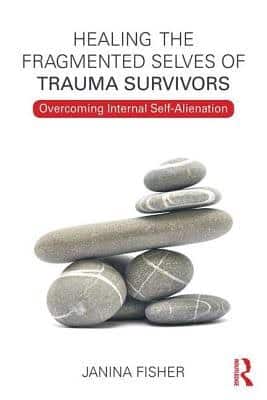
Healing the Fragmented Selves of Trauma Survivors: Overcoming Internal Self-Alienation Routledge (2017)
Transforming the Living Legacy of Trauma: A Workbook for Survivors and Therapists PESI Publishing (2021)
Sensorimotor Psychotherapy: Interventions for Trauma and Attachment (co-authored with Pat Ogden) W. W. Norton (2015)
Videos: Featured Talks & Interviews
Janina Fisher`s teaching is most recognized by powerful themes of trauma and dissociation, attachment wounds, shame, and body-based healing. Watch now to see how she brings complex neuroscience into practical, compassionate language for clinicians.
Trauma, the Childhood Wound, and Vulnerability
How does childhood trauma affect safety?
Dr. Janina Fisher explains that in an unsafe home, a child’s nervous system prioritizes survival over connection.
Why do survivors struggle with vulnerability?
Without secure attachment, vulnerability feels dangerous, leading to protective “parts” that shield the self.
Healing Abandonment Wounds with Frank Anderson
How does childhood trauma affect safety?
Dr. Janina Fisher explains that in an unsafe home, a child’s nervous system prioritizes survival over connection.
Why do survivors struggle with vulnerability?
Without secure attachment, vulnerability feels dangerous, leading to protective “parts” that shield the self.
Video 1: Trauma, the Childhood Wound, and Vulnerability
- How to map protective parts without pathologizing the client.
- Three stabilization micro-skills clients can use in crisis.
- Using dual-awareness to lower arousal before memory work.
- Therapist language that de-escalates inner conflict.
- What “success” looks like in early-phase TIST.
Video 2: Janina Fisher & Frank Anderson: Reconnecting Self and Protective Parts
- How accessing self-energy as an internal resource takes time.
- Help protector parts feel seen and safe, then they relax and allow access.
- Validate without pathologizing the parts that feel abandoned by the Self and may resent it.
- Build a two-way trust between Self and parts.
- Gradually pace the work so presence with traumatized parts can emerge and integrate.
Janina Fisher & TIST FAQ
Who is Janina Fisher Ph.D.?
A clinical psychologist, author, and international teacher known for the TIST therapy modality and for integrating neurobiology, mindfulness, and somatic psychotherapy in trauma treatment.
What is Janina Fisher known for?
Dr. Fisher is known for developing the TIST psychotherapy modality and teaching practical strategies for complex trauma and dissociation.
Model overview: https://therapywisdom.com/janina-fisher#tist-model
What is Janina Fisher’s theory of trauma?
That trauma is an enduring imprint on body, mind, and brain, expressed in protective parts that make up “fragmented selves” and survival responses that can be stabilized and integrated with compassionate care.
See core ideas: https://therapywisdom.com/janina-fisher#tist-model
What therapeutic approach does Janina Fisher use? A body-oriented, mindfulness-based, parts-informed approach referred to as TIST that prioritizes stabilization, regulation, and internal cooperation.
What is TIST therapy?
Trauma-Informed Stabilization Treatment (TIST) is a trauma-informed parts model developed by Janina Fisher that integrates Sensorimotor Psychotherapy, Internal Family Systems, clinical hypnosis, and cognitive restructuring. It prioritizes stabilization and capacity-building (dual awareness, somatic skills, self-leadership) and reframes extreme behaviors and dissociation as protective survival responses.
Overview: https://therapywisdom.com/janina-fisher#tist-model
Free TIST Certification Webinar: https://therapywisdom.com/tist-certification-training/
What does TIST stand for?
Trauma-Informed Stabilization Treatment.
Summary: https://therapywisdom.com/janina-fisher#tist-model
Janina Fisher’s overview: https://janinafisher.com/tist
What is the TIST trauma model?
TIST views extreme behaviors, urges, and dissociation as protective survival responses and teaches skills for stabilization, dual awareness, and parts dialogue before any optional trauma processing.
See principles: https://therapywisdom.com/janina-fisher#tist-principles
How does TIST differ from EMDR or DBT?
TIST centers on stabilization and parts-informed self-leadership, while EMDR focuses on memory processing and DBT on skills training. Many clinicians start with TIST to reduce crises and expand capacity.
Compare core ideas: https://therapywisdom.com/janina-fisher#tist-principles
Is TIST similar to DBT or EMDR?
They can complement each other, but TIST prioritizes safety, dual awareness, and parts-informed regulation before memory work or intensive skills modules.
See how TIST layers with other methods: https://therapywisdom.com/janina-fisher#tist-principles.
Can TIST be combined with EMDR or IFS?
Yes. Clinicians often pair TIST stabilization and parts language with EMDR or IFS so clients have more choice and tolerance before deeper processing.
How this works in practice: https://therapywisdom.com/janina-fisher#tist-principles
EMDR background at https://www.emdria.org/
What is the difference between IFS and TIST?
IFS emphasizes internal dialogue and Self-leadership; TIST emphasizes stabilization, somatic awareness, and dual awareness before deeper integration, especially for dissociation.
Comparison notes: https://therapywisdom.com/janina-fisher#tist-principles
Is TIST evidence-based?
TIST is evidence-informed: it integrates components drawn from established, research-supported approaches in somatic, cognitive, and skills training traditions, and can be used alongside EMDR. Outcomes research specific to TIST is developing; see training and references a https://therapywisdom.com/tist-certification-training/ and https://therapywisdom.com/trauma-therapy-training/ and background on body-oriented methods at https://sensorimotorpsychotherapy.org/.
Is TIST appropriate for dissociation?
Yes, TIST is designed for dissociation by working respectfully with protective parts, strengthening dual awareness, and sequencing skills before memory work.
Use cases: https://therapywisdom.com/janina-fisher#tist-model
ISSTD resources: https://www.isst-d.org/.
Who can train in TIST trauma therapy?
Designed primarily for licensed or pre-licensed mental-health professionals; experienced somatic practitioners and trauma-informed coaches may be considered.
See current cohort details and CE info: https://therapywisdom.com/healing-the-fragmented-selves/
What are the requirements for TIST Certification; are there prerequisites?
Requirements for becoming a Certified TIST Practitioner include full participation in the 3 levels of TIST training with Dr. Fisher through Academy of Therapy Wisdom (Level 3 is required for certification), live small group meetings with a TIST supervisor to practice and refine your skills, and confirmation of preparedness by the supervisor.
Read more: https://therapywisdom.com/tist-certification-pathway/
How many therapists have trained with Janina Fisher, Ph.D.?
Tens of thousands of mental health professionals have trained with Janina Fisher, and thousands have attended her TIST Certification.
See testimonials here: https://therapywisdom.com/janina-fisher#janina-testimonials.
Does TIST require retelling traumatic events?
No. TIST emphasizes stabilization and present safety, using parts dialogue and regulation skills without detailed retelling unless clinically appropriate.
Rationale: https://therapywisdom.com/janina-fisher#tist-principles.
How can therapists use mindfulness to support trauma stabilization?
Use brief dual-awareness cues to notice a part’s impulse and the body’s state without acting, then return to present-moment orientation.
Practical steps: https://therapywisdom.com/janina-fisher#tist-principles
What are the phases of trauma treatment according to Janina Fisher?
Stabilization, processing, and integration. In TIST, stabilization teaches dual awareness, somatic grounding, and parts dialogue to create safety before processing.
Phases explained: https://therapywisdom.com/janina-fisher#tist-principles
What is the “fragmented self of trauma survivors”?
It describes how trauma divides the self into parts with different protective roles; TIST invites curiosity and collaboration rather than pathologizing these states.
Read more: https://therapywisdom.com/janina-fisher#structural-dissociation
Where can I take Janina Fisher’s courses?
The full TIST Certification Program [a][b]and related trainings are hosted by Academy of Therapy Wisdom. She also teaches on platforms like PESI, NICABM, and others.
Start here: https://therapywisdom.com/tist-certification-training/
See courses here: https://therapywisdom.com/janina-fisher#courses-grid
Where can I attend a free Janina Fisher training?
Free webinars and event replays are periodically available; check current listings on the Janina
Fisher Training list: https://therapywisdom.com/janina-fisher#courses-grid
Do Dr. Fisher’s courses offer CEs?
Yes, most courses include CE options for mental-health professionals; specific approvals are listed on each training page.
CE overview: https://therapywisdom.com/healing-the-fragmented-selves/ and https://therapywisdom.com/trauma-therapy-training/
What Janina Fisher books should I read?
Start with Healing the Fragmented Selves of Trauma Survivors and Transforming the Living Legacy of Trauma.
Books section: https://therapywisdom.com/janina-fisher#janina-books
Does Janina Fisher still teach live events?
Yes. She continues to present in-person at international conferences, including the Psychotherapy Networker Symposium, Trauma Research Foundation Summit, and Cape Cod Institute workshops, and live online at Academy of Therapy Wisdom.
See upcoming trainings for therapists: https://therapywisdom.com/
Where can I learn specific techniques like “parts language” and the “then vs now” cue?
These are core to TIST and are taught in certification and supplementary resources.
Techniques overview: https://therapywisdom.com/janina-fisher#tist-principlesAvailable
Trainings: https://therapywisdom.com/janina-fisher#courses-grid.

Join Dr. Janina Fisher for a FREE webinar
Healing the Fragmented Selves of Trauma Survivors
In this free webinar, Dr. Janina Fisher will help you:
How to identify and work with fragmented selves in trauma survivors.
How to stabilize chronically at-risk clients using TIST principles.
How to address self-alienation and dissociation to foster self-acceptance.
How to navigate therapeutic gridlock and work effectively with resistant, stuck, or emotionally overwhelmed clients.
References
- Sensorimotor Psychotherapy Institute
- Trauma Research Foundation
- Cambridge University Press
- Child Trauma Academy
- Khiron Clinics
- International Society for the Study of Trauma and Dissociation
- EMDR International Association
- The New York Times
- Neuroscience News
- Academy of Therapy Wisdom
- Wiktionary TIST Entry
Last Updated: November 2025
Written and fact-checked by Heather Philipp, Academy of Therapy Wisdom Media Team.
CE hours, guarantees, pricing displays, and access details on this page are synchronized with each product’s live page. We review and update this information quarterly, and we update sooner if program details change.