

In this one-day workshop, you’ll explore how to recognize, assess, and treat nightmares as meaningful communications from the nervous system, and learn an embodied, evidence-informed framework for guiding clients toward relief and integration.
Imagine you’re working with a client who dreads going to sleep. They’ve done years of trauma work, and yet every night the same dream jolts them awake, heart pounding, body shaking, unable to return to rest…
Another client tells you that their dreams are growing darker, that they’re afraid to close their eyes because of what they might see…
Or a long-term client, stable in every other way, begins to experience recurring nightmares that leave them anxious, exhausted, and afraid something inside them is breaking down.
These dreams are minimized or avoided by both clients and therapists because they seem too frightening to touch….
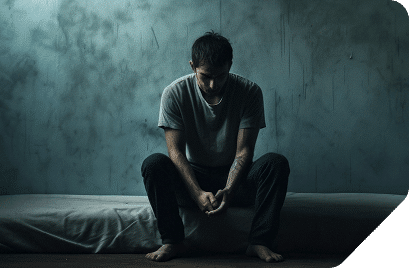
But what I’ve found through years of research and clinical practice is that nightmares are not random or pathological; they are the body and psyche’s attempt to complete what remains unfinished. They are emotional communications from the deepest parts of ourselves, calling for attention, integration, and care.
Nightmares can feel like the most terrifying part of trauma, but they can also be among the most powerful opportunities for healing.
When you learn to walk with nightmares (which I’ll teach in this workshop) instead of silencing or analyzing them, they become extraordinary allies. They can show us where fear is frozen, where the nervous system is locked in survival mode, and where the mind is seeking repair. And when clients engage these dreams with curiosity and support, transformation can happen, both in the dream and in waking life.
Through this six-hour training, I’ll share:
Let me show you how dreamwork can become one of your most effective therapeutic tools.
“Nightmares are clearly linked with serious health considerations – they can be both symptom and cause, as well as an avenue for intervention for a range of mental and physical health issues, notably suicide and heart disease.”
-Leslie Ellis
I really liked both theoretical and experiential learning. I was needing a more structured and systematic knowledge about dreamwork, and this course really provided me with that. It’s a beautiful foundation that will help me expand my interest in this area.
-Ivana Kolakovic,
Registered Psychtherapist
If you’re interested in working with dreams this is a solid, inspiring, practical, evidence-based method that has empowered me to connect more deeply with my own dream life and work with my clients and their dreams with confidence.
-Kate Tenni –
Sensorimotor Art Therapist, Art Therapist and Grief Counsellor
You will increase your confidence to work with your dreams and the dreams of others. You will have a greater understanding of trauma-related dreams and how to work with them… and you will be in the hands of an expert in dreams and dreamwork.
– Rocio Aguirre,
Coach and Meditation Teacher

so that you can help clients see these dreams not as pathology, but as the psyche’s attempt to metabolize trauma and restore regulation.
so that you can recognize early warning signs and use dream content as a vital diagnostic and preventive tool in clinical work.

so that you can apply a step-by-step, embodied method for helping clients transform recurring nightmares through safety, resourcing, and experiential dreamwork.

so that clients experience felt safety and emotional release, leading to real physiological and psychological change.

so that your clients can shift from helplessness to empowerment within their dreams, reducing distress and improving overall functioning.

so that you can address a commonly neglected but clinically significant symptom area with skill, compassion, and evidence-based confidence.
Despite overwhelming evidence that nightmares are both treatable and clinically important, too few therapists ask about them, and too many clients suffer in silence.
Nightmares are linked not only to trauma, anxiety, and depression but also to cardiovascular health and suicide risk. They can be both a symptom and a cause, but also an avenue for healing when treated directly.
By learning how to engage these dreams safely and skillfully, you’ll gain a powerful way to help your clients process trauma, reduce physiological stress, and reclaim a sense of peace in sleep and waking life.
You’ll also discover how to apply these same principles to your own dreams — because as therapists, we too can be guided, healed, and renewed by the wisdom that speaks in the night.
Dr. Leslie Ellis is a leading expert in the use of somatic approaches in psychotherapy, in particular for working with dreams, nightmares and the effects of trauma. She is the author of A Clinician’s Guide to Dream Therapy (Routledge, 2019) and offers many training opportunities in embodied, experiential dreamwork based on her book. She has a PhD in Clinical Psychology from the Chicago School of Professional Psychology, with a specialization in somatic approaches. Her dissertation on using focusing-oriented therapy to treat PTSD for refugees with recurrent nightmares won the Ernest Hartmann award from the International Association for the Study of Dreams. Dr. Ellis has a Masters from Pacific Graduate Institute and worked as a therapist in private practice in Vancouver, BC for more than 20 years. Her approach to therapy combines Jungian and focusing-oriented techniques.
She was adjunct faculty at Adler University where she taught clinical skills and developed a trauma course for the Masters of Counselling program. She is a Certifying Coordinator and past president of The International Focusing Institute. For many years she has offered a Vancouver-based certification program for practicing therapists who want to incorporate focusing-oriented therapy techniques into their practice. Dr. Ellis has published numerous book chapters and journal articles on the use of focusing and dreamwork in psychotherapy. She has also presented her work to a worldwide audience. For example, she offered a keynote address for the 2020 online conference for the International Association for the Study of Dreams, has presented on nightmare treatment at MIT and was a featured speaker and panelist at the 2020 FOT (Focusing-Oriented Therapy) Conference. She also offers courses through The Jung Platform and is vice president of the International Association for the Study of Dreams.
A Clinician’s Guide to Dream Therapy is the perfect resource for clinicians wishing to incorporate dreamwork into their psychotherapy practice. Leslie Ellis offers a scholarly yet entertaining summary of the major contemporary approaches to dreams and outlines the key effective elements across these approaches. She illustrates all this with engrossing clinical anecdotes that give readers a solid idea of how to begin this work.
-Deirdre Barrett;
author, The Committee of Sleep; faculty, Harvard University.
For me, the experiential embodied dreamwork process is such a respectful, deeply meaningful, and soul feeding way of working with dreams. This way of accessing unconscious content feels deeply nourishing, healing, and transformative. I know I can trust this process. Since I started using this approach I’ve noticed many benefits. My capacity to witness myself and others has expanded. I’ve become more open to ‘not knowing’ and letting the process unfold in its own time. I am able to access my own inner resources with ease. I have deeper respect for and I’ve become very protective of my own and other people’s dreams. I wholeheartedly recommend this program.
-Sylvia Barnowski,
artist and registered social worker
I tried Dr. Ellis’ re-scripting method with one of my PTSD clients who has what she calls “gut clenchers” intrusive nightmares that wake her up and keep her in hyper arousal for several hours. This technique worked so well that she was able to calm down within 20 minutes. She was so pleased that she asked me to send you a thank you email.
Registered Psychologist, Victoria, BC
I could not have imaged the growth and learning this course would bring when I signed up. I’m loving how comfortable I feel working with my clients dreams and the excitement, passion, and motivation I have for continuing the journey.
-Kristen Stroud,
Integrative Mind-Body Practitioner and Mindfulness Educator
Join Leslie Ellis, PhD, for this transformative 6-hour live workshop and discover how to turn the night’s most distressing experiences into pathways of profound healing…
If you are a BIPOC helping professional,
please accept our discounted enrollment price for this course by clicking here.
We are glad to have you with us!
We offer a 14 day money back guarantee on all of our live & on-demand courses. If you find that the training is not right for you, please email us at support@therapywisdom.com within 14 days of your purchase. You can request a full refund or exchange, whichever you would prefer.
No. You don’t need any background in dreamwork to benefit from this training. Leslie will guide you through the foundational principles and experiential practices step-by-step, making the material accessible for clinicians from all orientations.
Yes. Leslie will demonstrate her Nightmare Relief approach in real time and lead participants through gentle experiential exercises to help you embody the learning and feel how this process works.
All registrants receive access access to the on-demand workshop, so you can revisit the teachings, demonstrations, and practices as much as you’d like.
This workshop does not currently offer CE credits, but all participants receive a Certificate of Completion.
You’ll have unlimited access to the content through your Academy of Therapy Wisdom account so you can return to the material whenever you like.
Check out our shop to see what's available