Janina Fisher, PhD
Dear Colleague,
Over the past 20 years, I’ve heard countless therapists express a familiar and painful frustration: “My client says they want help, but they refuse the help I offer. They avoid sessions, reject interventions, or smile and nod and say they’re fine.” Sometimes we see them as stuck and sometimes as resistant, but whatever we call it, it creates an impassable wall—between us and the client, between the client and their healing.
But I want to offer you a different perspective. One that has guided and transformed my work over the years.
Resistance is not opposition. It’s protection.
When a client has lived through abuse, abandonment, or humiliation, seeking help is not simply an act of courage—it is also an act that activates survival responses. The vulnerability required to trust a therapist can feel as dangerous as the traumas they endured. Their nervous systems, shaped by threat and fear, are doing exactly what they were designed to do: protect.
Even when clients deeply want our help, parts of them may be terrified of what that help might require. They may fight, flee, or freeze in response to the therapeutic relationship itself. This is not resistance in the traditional sense—it is the body’s memory of danger playing out in the present.
That’s why I created this course. Over the course of five sessions, we will explore how to recognize and reframe resistance—not as a therapeutic failure, but as an internal conflict rooted in trauma. We will draw from Internal Family Systems, Sensorimotor Psychotherapy, and mindfulness-based approaches to understand how some parts of our clients long for healing while others remain committed to keeping them safe at all costs.
I look forward to seeing you inside!
Warmly,
Janina Fisher
Academy of Therapy Wisdom
Understanding Resistance as Defensive, Not Offensive
We begin by challenging the traditional view of resistance. Rather than seeing it as opposition, you’ll learn how to recognize it as a protective survival response—an instinctive defense rooted in trauma. We’ll explore the many forms resistance can take in the therapy room: the help-rejecting client, the compliant-but-disengaged one, and the individuals who appear hopeless, shut down, or highly controlling. You’ll also learn how therapy itself can unintentionally evoke animal defense responses—such as fight, flight, freeze, or submission—and how to work skillfully with those reactions without reinforcing them.
Conceptualizing Resistance and Stuckness as a Parts Problem
In this session, we’ll reframe resistance through the lens of parts work and structural dissociation. Rather than asking why a client isn’t cooperating, we’ll learn to ask: Which part of them is resisting, and why? You’ll gain a practical understanding of how to map and make sense of clients’ internal conflicts—where some parts seek connection and healing, while others are still protecting against past danger. By shifting from confrontation to collaboration with protective parts, you’ll discover how to reduce power struggles and help clients feel more integrated, empowered, and safe.
Overcoming the Therapist’s Resistance to Resistance
This session turns the focus inward—on our own countertransference. As therapists, we too can feel resistant: resistant to clients who refuse our help, challenge our expertise, or seem to sabotage their own progress. You’ll learn how to notice and regulate your own nervous system responses in the face of therapeutic impasse. We’ll explore how to navigate the client’s fear of both closeness and distance, and how to use moments of tension as opportunities for growth. You’ll also discover how playfulness and curiosity can soften resistance and reintroduce movement into seemingly stuck dynamics.
Healing the Wounds of the Past
In this call, we turn toward the deeper healing work: the trauma wounds at the core of resistance and stuckness. You’ll learn how to help clients soothe the parts of themselves that are still in survival mode—without rushing the process or bypassing their defenses. We’ll explore techniques to facilitate inner dialogue, negotiate with protective parts, and support self-compassion as a path to integration. This session is about shifting from protection to connection, and from internal conflict to internal cooperation.
Integration and Application
In this final session, we bring it all together. You’ll have the opportunity to reflect on how your understanding of resistance has shifted, and explore real-world clinical examples with. Janina will guide you through an integration process that helps consolidate the tools, frameworks, and insights from the previous sessions—so you can carry them confidently into your therapeutic work.

Over the 5 Live Sessions, You'll Discover…
After each of the calls with Janina, tune into a 30 minute therapeutic yoga session with Trauma-Informed Yoga Therapist De West
Exclusive access to a bonus interview between Janina and Ruth Cohn, MFT
Worksheets that will accompany Janina’s new book
Plus you’ll get these incredible bonuses…
Who This Course Is For—And Why It Matters Now
If you’ve ever worked with a trauma survivor who seems disengaged, oppositional, or stuck—this course is for you.
Resistance and Stuckness is designed for psychotherapists, counselors, and mental health professionals ready to move beyond pathologizing “resistance” and learn how to work with it compassionately and effectively.
You’ll get practical tools from Internal Family Systems, Sensorimotor Psychotherapy, and integrative approaches—so you can decode shutdowns and defiance as protective responses, not clinical failures.
In this time of collective stress and overwhelm, traditional interventions often fall short.
This course offers a trauma-informed framework to help you meet clients where they are and guide them toward real connection and change.
Meet Your Presenter
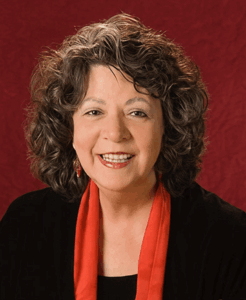
Janina Fisher, Ph.D.
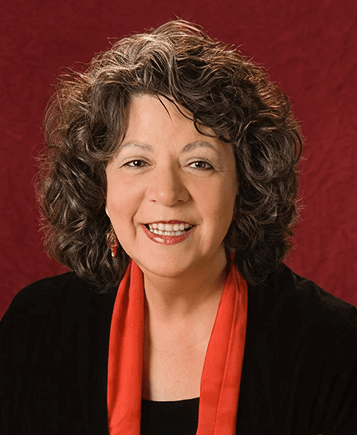
Janina Fisher, Ph.D. is clinical psychologist, former instructor at Harvard Medical School, board member of the Trauma Research Institute, and a patron of the John Bowlby Centre, as well as an international expert on the treatment of trauma and dissociation. She is the author of Healing the Fragmented Selves of Trauma Survivors: Overcoming Self-Alienation (2017), Transforming the Living Legacy of Trauma: a Workbook for Survivors and Therapists (2021), and the Living Legacy Instructional Flip Chart (2022). Best known for her work on integrating newer neurobiologically-informed interventions into traditional psychotherapy approaches, she is the co-author with Pat Ogden of Sensorimotor Psychotherapy: Interventions for Attachment and Trauma (2015).
CE Information
This program has been approved for 8 distance learning CEs by the following organizations: CAMFT, NBCC, NASW MA Chapter, NYSED MHC, NYSED SW.
Full CE info can be found by clicking here


Reviews
There are no reviews yet.