

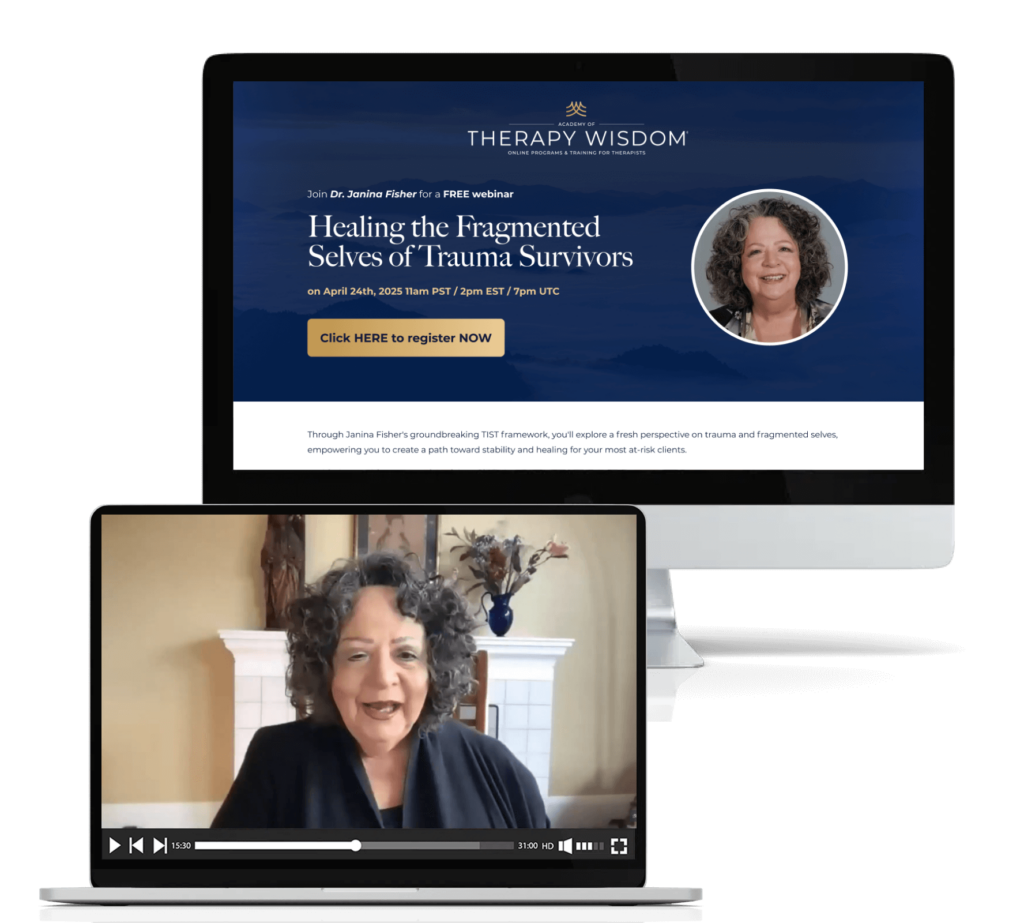
Join Dr. Janina Fisher for a FREE webinar

Healing the Fragmented Selves of Trauma Survivors

Janina Fisher

Through Janina Fisher’s groundbreaking TIST framework, you’ll explore a fresh perspective on trauma and fragmented selves, empowering you to create a path toward stability and healing for your most at-risk clients.

In this free trauma therapy training webinar, Dr. Janina Fisher will help you:

Groundbreaking

How to identify and work with fragmented selves in trauma survivors:

Learn to see beyond surface symptoms to recognize the conflicting defensive strategies of the "Going On with Normal Life" self and the traumatized parts of your clients.

How to stabilize chronically at-risk clients using TIST principles:

Discover how to use neurobiologically-informed strategies to reduce dysregulation, re-engage the prefrontal cortex, and externalize symptoms to create emotional space for change.

How to address self-alienation and dissociation to foster self-acceptance:

Help clients develop compassionate relationships with their disowned parts and address shame, self-loathing, and maladaptive survival strategies.

How to navigate therapeutic gridlock and work effectively with resistant, stuck, or emotionally overwhelmed clients:

Learn to engage clients’ Wise Mind and integrate mindfulness, psychoeducation, and attachment repair for sustainable progress.
Janina Fisher has decades of experience in trauma therapy and will guide you through the innovative framework she has spent years developing and perfecting. This webinar will equip you with tools you can use right away, and help you understand if beginning the TIST pathway with one of Janina´s best online therapy CE courses is right for you. So, go ahead and click the button to start watching right now. 

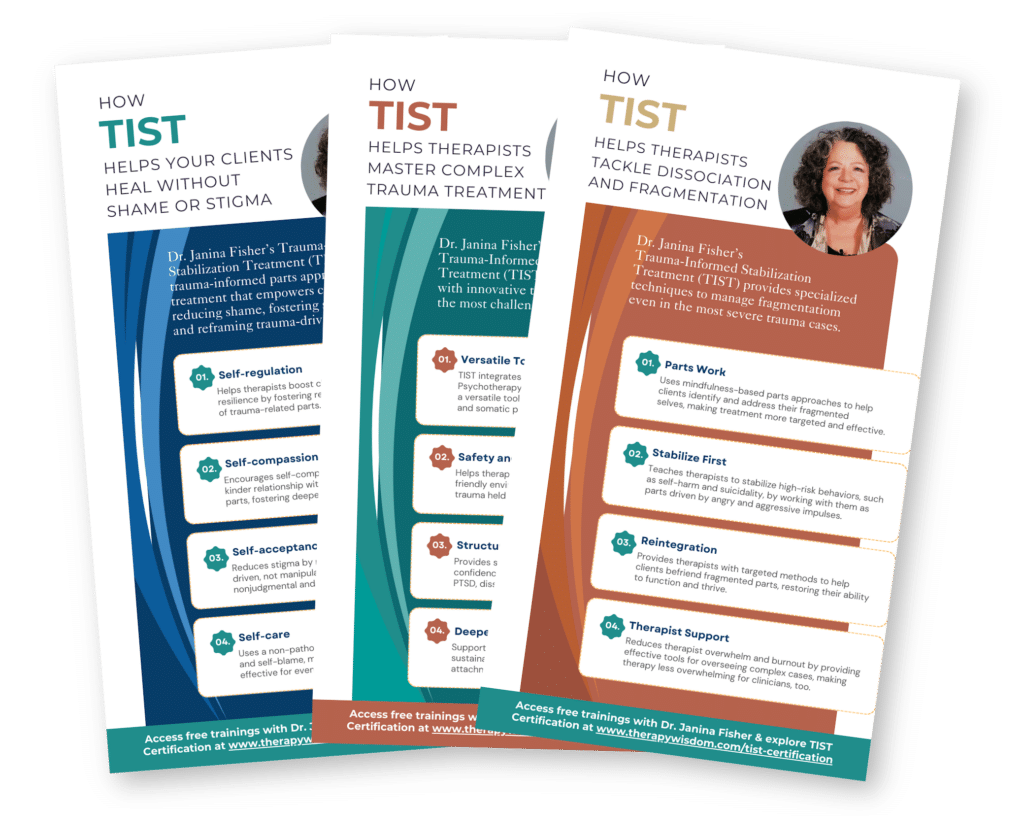
When you register today, you will also get instant access to 3 TIST Infographics:

  1. How TIST Helps Therapists Tackle Dissociation and Fragmentation
  2. How TIST Helps Therapists Master Complex Trauma Treatment
  3. How TIST Helps Your Clients Heal without Shame or Stigma
TIST flyers promoting trauma therapy techniques by Dr. Janina Fisher

Did You Know?

Trauma can cause individuals to fragment into different “selves,” each adopting a unique survival strategy such as fight, flight, freeze, submit, or attach. This fragmentation often leads to self-alienation, dissociation, and behaviors like self-criticism, emotional outbursts, avoidance, or even self-destructive tendencies.

According to Dr. Janina Fisher, these responses are actually adaptive strategies that help individuals survive the unendurable. By understanding and addressing these fragmented selves with compassion, therapists can guide clients toward reconnection, healing, and lasting transformation.

The TIST model, developed by Janina Fisher, offers a groundbreaking approach to stabilizing at-risk clients and fostering the integration of these fragmented parts, creating profound shifts in the therapeutic process. If you want to learn more, don’t miss Janina’s upcoming webinar…

Janina Fisher, Ph.D.

Janina Fisher, Ph.D. is a licensed Clinical Psychologist and an esteemed member of the Trauma Research Foundation’s Board. With a wealth of experience, she serves as Assistant Director of the Sensorimotor Psychotherapy Institute and has a long history of leadership in trauma treatment, including her tenure as president of the New England Society for the Treatment of Trauma and Dissociation.

A former Harvard Medical School Instructor, Dr. Fisher has co-authored and authored multiple key texts in the field of trauma therapy, including Sensorimotor Psychotherapy: Interventions for Trauma and Dissociation (2015), Healing the Fragmented Selves of Trauma Survivors (2017), Transforming the Living Legacy of Trauma (2021), and the Living Legacy Flip Chart (2022).

Janina Fisher

TIST Training with Janina Fisher

Healing the Fragmented Selves of Trauma Survivors

Revolutionize How You Approach Trauma Therapy

Trauma therapy can be both deeply rewarding and incredibly challenging. For many therapists, it’s not uncommon to encounter clients who seem resistant, stuck, or overwhelmed by their emotional pain. These clients often leave even the most experienced practitioners feeling helpless and uncertain about how to move forward.

The Trauma-Informed Stabilization Treatment (TIST) model, developed by Janina Fisher, Ph.D., offers a groundbreaking solution. Rooted in neurobiology, attachment theory, and years of clinical expertise, TIST provides a powerful framework for understanding trauma as a survival strategy—empowering therapists to address the fragmented selves of trauma survivors with greater clarity and compassion.

If you’re ready to transform frustration into progress and help your toughest clients achieve stability, this webinar is your next step.

Revolutionize How You Approach Trauma Therapy

What Makes the TIST Model So Effective?

A Focus on Fragmented Selves

A Focus on Fragmented Selves

Trauma survivors often split into different “selves,” each adopting a survival strategy to navigate unendurable experiences. These fragmented selves—rooted in fight, flight, freeze, submit, or attach responses—may manifest as behaviors like self-criticism, emotional outbursts, avoidance, or self-destruction.

Rather than viewing these behaviors as problems to fix, the TIST model reframes them as adaptive responses that require understanding and integration. By addressing these parts with compassion, therapists can help clients reconnect with their authentic selves and foster lasting healing.

Core Principles of TIST

Trauma as a Survival Strategy

TIST teaches therapists to recognize symptoms of trauma as evidence of the brain’s attempt to protect itself. Behaviors like dissociation, self-sabotage, and emotional dysregulation are reframed as survival responses rather than pathologies.

Integrating Fragmented Selves

The model emphasizes working with the distinct parts of the self, helping clients acknowledge and integrate these fragmented aspects to reduce internal conflict and emotional distress.

Neurobiological and Attachment-Focused Interventions

TIST provides tools to stabilize clients by re-engaging the prefrontal cortex, improving emotional regulation, and fostering a sense of safety through attachment repair.

Collaborative Healing

Through psychoeducation and mindfulness, TIST encourages clients to develop self-awareness and compassion for their parts, empowering them to take an active role in their healing journey.
By incorporating these principles, TIST equips therapists with a structured yet flexible approach to supporting even the most challenging clients.

What You’ll Gain from learning the TIST method:

Dr. Janina Fisher's TIST method

Dr. Janina Fisher’s TIST method will provide you with practical tools and insights to enhance your trauma therapy practice. Here’s a sampling of what you’ll learn from TIST:

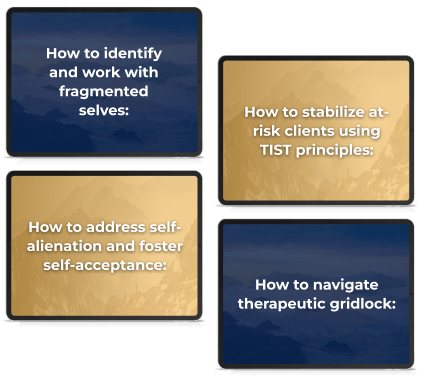
How to identify and work with fragmented selves:

Go beyond surface symptoms and recognize the conflicting strategies of the “Going On with Normal Life” self and the traumatized parts of your clients.

How to stabilize at-risk clients using TIST principles:

Discover neurobiological strategies to reduce dysregulation, re-engage the brain’s higher functions, and externalize symptoms for more effective interventions.

How to address self-alienation and foster self-acceptance:

Learn techniques to help clients build compassionate relationships with their disowned parts, reducing shame and encouraging integration.

How to navigate therapeutic gridlock:

Develop skills to work through resistance, stuck patterns, and emotional overwhelm, helping clients achieve sustainable progress.

TIST training is designed to equip you with actionable strategies that you can implement immediately in your practice.

Why Therapists Love the TIST Approach

Real Results for Real Clients

Therapists using the TIST model report significant breakthroughs with clients who previously seemed unresponsive to traditional trauma treatments. By understanding and addressing the fragmented selves, practitioners have helped clients:

Prevention of Therapist Burnout

The TIST approach doesn’t just transform the client’s experience—it also makes therapy more sustainable for practitioners. By equipping therapists with a deeper understanding of trauma dynamics and practical tools for intervention, TIST helps reduce frustration and prevent the emotional exhaustion that often comes with working with at-risk clients.

A Fresh Perspective on Trauma Therapy

The Science Behind the Model

The Science Behind the Model

Developed through decades of clinical practice, TIST integrates the latest research in neurobiology and attachment theory. It provides therapists with an evidence-based framework to understand how trauma impacts the brain, body, and sense of self.

Key components of the model include:

Healing Beyond the Surface

Unlike symptom-focused approaches, TIST works at the root level of trauma, addressing the internal fragmentation that often keeps clients stuck. By helping clients integrate their fragmented selves, the model opens the door to profound and lasting healing.

Meet Dr. Janina Fisher

Meet Dr. Janina Fisher

A true pioneer in trauma therapy, Janina Fisher, Ph.D., has dedicated her career to helping therapists and clients navigate the complexities of trauma recovery. Her extensive credentials include:

With her wealth of knowledge and compassionate approach, Dr. Fisher has trained thousands of therapists worldwide, equipping them with the skills to transform their practices and make a lasting impact.

Why You Can’t Miss This Opportunity

Who Should Attend?

This webinar is ideal for mental health professionals who:

What You’ll Walk Away With

By the end of the webinar, you’ll have a deeper understanding of how to address trauma through the lens of fragmented selves and practical tools to make an immediate difference in your clients’ lives.

Ready to take your trauma therapy practice to the next level? Don’t miss this transformative training!

Conclusion: A New Approach to Healing the Fragmented Selves

Trauma survivors often feel fragmented, disconnected, and overwhelmed by the legacy of their past. With the TIST framework, therapists can help these clients reconnect with their inner selves, stabilize their emotions, and reclaim their lives.

Whether you’re working with a client for the first time or navigating therapeutic gridlock, this webinar will equip you with the insights and tools you need to succeed.

Don’t wait—join Dr. Janina Fisher and discover how healing the fragmented selves of trauma survivors can transform both your practice and your clients’ lives.

Free Access Now