
Hungry For Security
Healing Disordered Eating Through an Attachment Lens
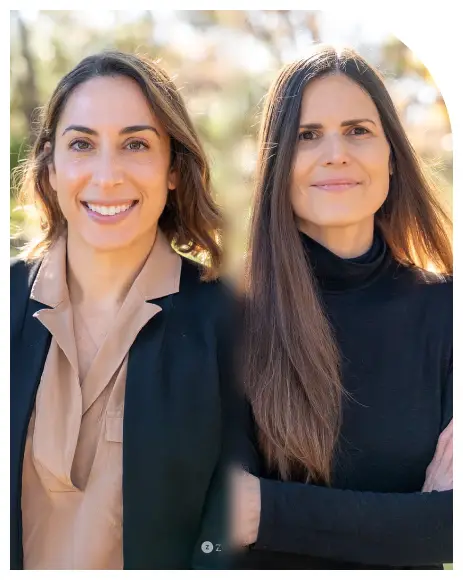
with Vanessa Scaringi and Kathryn Garland
Healing Disordered Eating Through an Attachment Lens
with Vanessa Scaringi and Kathryn Garland
"If you're feeling activated in a relationship, you can slow down and try to repair your attachment wound. You can abstain from that relationship. You cannot abstain from your relationship with food."
-Vanessa Scaringi
Dear Colleagues,
It's our distinct pleasure to invite you to this course, Hungry for Security: Healing Disordered Eating Through an Attachment Lens, which we've carefully designed to explore the intricate and often deeply personal topics of food, body image, and attachment.
Throughout our professional experiences, we've found that working with clients around these issues requires not only a deep understanding of clinical theory but also a commitment to compassion, self-awareness, and cultural sensitivity.
As therapists, we bring our own experiences, biases, and emotional landscapes into the therapy room, and this course encourages reflection on how those aspects of ourselves impact the work we do with clients. Throughout the modules, you'll find opportunities to engage with your own relationship to food and bodies while learning how to better support clients navigating disordered eating, weight stigma, and attachment-based challenges.
We know that these topics are intertwined with broader systemic and sociocultural factors. That's why, in this course, we explore the pervasive impacts of weight stigma, diet culture, and societal expectations around health and bodies. We delve into frameworks like Health at Every Size (HAES) and Intuitive Eating to provide you with practical tools to challenge harmful narratives, empower clients, and help them reconnect with their innate ability to care for themselves.
We also recognize the complexity of disordered eating, which is why we introduce concepts like artificial attachments and harm reduction. These approaches help us understand how clients use food behaviors to cope with emotional pain or disconnection and offer ways to gently guide them toward healthier, more sustainable patterns of care. In this work, we are always striving to balance clinical expertise with deep empathy and an understanding of the larger systems at play.
Finally, this course is meant to serve not only your clients but also you. As clinicians, we're all impacted by the world around us-the messages we receive about food, health, and worthiness-and we encourage you to use this space to reflect on how your own relationship with these topics informs your therapeutic practice. Our hope is that this course helps you grow both personally and professionally, enhancing your ability to support your clients in healing their relationships with food, their bodies, and themselves.
Both of us have worked with disordered eating for a long time, but it was through private practice that we found that really getting to know your clients and forming relationships makes a huge difference. We've also found that group therapy and the relationships that evolve from that unlock insights that would otherwise be missed. The Covid pandemic exacerbated a lot of the disconnection and difficulties that people have with food - there's been a lack of security and stability - and this relational style of practice serves as a natural antidote.
Thank you for your interest in this course. We're honored to be a part of your journey and look forward to the community growth and healing that will come from this experience.
Warmly,
Academy of Therapy Wisdom
Kathryn Garland & Vanessa Scaringi

Understanding the context of one's struggles is always important in any recovery process. One's early relationship with food and early emotional learnings of attachment are intertwined developmentally. Exploring how one's attachment style affects someone's relationship with food takes the work with client's with disordered eating experiences to deeper levels, ultimately offering the possibility for more sustainable healing. Vanessa and Kathryn's work on attachment and disordered eating is wonderful and they are also gifted teachers and clear communicators. What a great class.
- Juliane (Jules) Taylor Shore, LMFT, LPC, SEP
As therapists, we are witnessing increasing rates of disordered eating, weight stigma, and emotional struggles tied to societal pressures around health and appearance.
These problems are often exacerbated by diet culture, systemic weight bias, and the pervasive messages that equate worth with thinness or "healthy" behaviors. The course was developed in response to the urgent need for a therapeutic approach that integrates an understanding of these systemic issues with practical, compassionate strategies for helping clients heal their relationship with food and their bodies.

Hungry for Security: Healing Disordered Eating Through an Attachment Lens is a collaborative effort from Kathryn Garland and Vanessa Scaringi, two experienced clinicians who have spent years working with clients facing disordered eating and attachment-based challenges. Their deep understanding of the psychological, emotional, and social dimensions of eating disorders, combined with their personal commitment to Health at Every Size (HAES) and harm reduction models, makes them uniquely qualified to teach this course. Both Kathryn and Vanessa have dedicated their careers to exploring how societal pressures, attachment theory, and emotional regulation intersect with food behaviors, which allows them to offer a holistic perspective on these issues.
After taking this course, you'll be empowered to help your clients navigate disordered eating behaviors, recognize and challenge weight stigma, and cultivate healthier relationships with food. You'll also develop a deeper understanding of how attachment theory informs emotional regulation and coping mechanisms related to food. You'll have practical tools and perspectives that you can start using in your practice right away that will make a huge difference in the lives of your clients.
This course is for you if…
In this workshop you will learn:
In this module we're first going to slow things down by providing the context for why talk about this now. We feel that rooting the material in our current moment is really helpful in deepening our understanding of what is going on with clients, so you can see the whole picture.
Some key takeaways are:

Module - 01

Module - 02
In this module, we're going to walk through how our early attachment relationships impact our relationships with food, our bodies, and other people. We'll also do a broad overview of eating disorders.
Some key takeaways are:
In this module we break down the actual behaviors and map them on to attachment theory more specifically.
Some key takeaways are:

Module - 03

Module - 04
This module explores the complex relationship between attachment theory and disordered eating, focusing on how early caregiving experiences shape emotional regulation and coping mechanisms.
Some key takeaways are:
This module examines the personal and professional complexities therapists face when addressing issues related to food, bodies, and weight stigma with clients. It emphasizes the importance of self-awareness, understanding countertransference, and recognizing the broader social, cultural, and political influences that shape our relationships with food.
Some key takeaways are:

Module - 05
Get Access Now for
$147

If you are a BIPOC helping professional,
please accept our discounted enrollment price for this course by clicking here.
We are glad to have you with us!

We are confident you will learn new skills in this online training. However, If during your first 7 days with this course, you don't believe you will learn anything to enhance your practice, please contact our support team at support@therapywisdom.com within 7 days of purchase and we will give you a full credit or exchange for another course, no questions asked.

Vanessa Scaringi
PhD, CEDS-C
is a licensed psychologist in Austin, TX. Vanessa co-owns a group therapy practice called, CALM Counseling where she works with adolescents, young adults, and adult populations. She primarily sees individuals inworking on recovery from eating disorders or body image issues. Vanessa also runs interpersonal process groups where clients can heal in community with others. Vanessa has dedicated much of her career to working in the eating disorder field. She is a relational psychologist who strives to understand the context of one's eating disorder. By facilitating insight, Vanessa works with her clients to identify patterns and behaviors that interfere with living the life they want. Vanessa also strives to instill a sense of hope, as she has found this is an important part of the change process.

Kathryn Garland
LCSW-S, CEDS-C
is a licensed clinical social worker and supervisor in Texas, New York, and Massachusetts. She is an IAEDP approved Certified Eating Disorder Specialist and Consultant. Kathryn spent her early career and completed postgraduate training in psychoanalytic psychotherapy in New York City. She incorporates relational and attachment-based methods into her work with clients. Her experience includes working with LGBTQ+ teens in the NYC foster care system, community mental health clinics, as well as primary therapist and IOP Program Coordinator at an eating disorder treatment center. Kathryn co-owns a group therapy practice called CALM Counseling in Austin, Texas.
Testimonials / Reviews

"Vanessa and Kathryn's presentation was a powerful expression of self-compassion for those with eating disorders. They believe that rather than framing the eating disorder as a maladaptive coping mechanism, it can be seen as a way for someone to feel safe in a world of diet culture. They also brought clarity to the concept of Attachment Theory and its connection with eating disorders. They are both terrific speakers whose ability to connect with the audience is a statement of their relatability."
"As a child and adolescent psychiatrist, I truly love how Kathryn and Vanessa beautifully connect attachment theory and eating disorders. Weight stigma and other systemic oppressions can increase susceptibility to disordered eating. This course helps clinicians to understand the emotional needs beneath a client's insecure attachment wounds and disordered eating behaviors."
- Erikka D. Taylor, MD, MPH, DFAACAP
Double Board Certified Child, Adolescent & Adult Psychiatrist
Arise, Chief Medical Officer
Project HEAL, Chair of the Board of Directors
"In knowing and working with Vanessa and Kathryn for many years, their passion for helping to identify a deeper understanding of disordered eating is evident. I am excited that they get to share their course on looking at disordered eating through the lens of one's attachment style. Vanessa and Kathryn are enthusiastic and engaging presenters to share this important information to anyone interested in working in the field of eating disorders."
- Jessica Genet, PhD
Within Health, Director of Clinical Development and Training
"In my advocacy work for body equity and liberation, I regularly discuss the harms of anti-fat bias. I appreciate how Kathryn and Vanessa incorporate societal attachment wounds into the discussion of weight stigma. Increasing provider awareness of these relational injuries can assist with healing and preventing disordered eating behaviors."
- Chevese Turner
Body Equity Alliance, Chief Executive Officer
Academy for Eating Disorders, Co-Chair, Diversity, Equity and Inclusion Advisory Committee
"Vanessa and Kathryn offer a groundbreaking approach to healing disordered eating. Both practitioners and clients will benefit from understanding the profound connection between attachment styles and our relationship with food. Their insights pave the way for lasting, meaningful change in how we relate not just to food, but to ourselves as a whole."
-Maytal Eyal, PhD
Frequently Asked Questions
Copyright 2024 Academy Wisdom Privacy Policy