
AN EXCLUSIVE ONLINE TRAINING
With Akilah Riley-Richardson, MSW, CCTP
Systemic Trauma in
Couples Therapy
Building Relational Privilege
With Akilah Riley-Richardson, MSW, CCTP


In this five-module course, you will learn:
Module One: Understanding the Foundation of Work with Minorities, and the P.R.I.D.E model
Module Two: Relational Interrogation
Module Three: Relational Interrogation, Part 2, and Responsible Externalizing
Module Four: Treating the Trauma and Building Liberatory Connections and Intimacy (LCI), Part 1
Module Five: Building Liberatory Connections and Intimacy, Developing Relational Privilege, Part 2
Hello,
You have a precious opportunity with the couples you see:
You can help them grow their relational imagination - that is, their ability to conceive of the intimacy they are worthy of.
Unfortunately, in many relationships, especially those where one or more partners has a marginalized identity, systemic trauma has made this very difficult.
From homophobia to racism to xenophobia, your clients may be impacted by marginalization… And even they might not be aware of how it is affecting their relationship.
But it does show up in intimate relationships. It shows up as hyper-aroused nervous systems, disagreements about how to handle discrimination, one partner feeling deeply, traumatically misunderstood...
Any of these responses to systemic trauma can deteriorate a couple's relational imagination to the point that they feel totally stuck.
For marginalized couples and partners, intimacy is often experienced as an elusive relational privilege.
I have developed a model for assessing and repairing the impacts of systemic trauma that I call the P.R.I.D.E. method. You can use this approach with couples who are reckoning with any kind of systemic trauma or marginalization to lead them to Liberatory Connections, greater intimacy, and increased relational privilege.
You are invited to join in a process of centering the experiences of your clients and helping to restore the sense of agency and worth in marginalized people. People of all races, genders, and sexual orientations are welcome.
Warmly,
Akilah Riley-Richardson, MSW, CCTP &
Academy of Therapy Wisdom
P.S. Marginalized couples have been cast in roles that they have not chosen. This course is designed to help us unmask the "theater" and support them into crafting new parts for themselves that restore their selfhood and intimacy, as well as their potential to change their world. You'll learn strategies to help marginalized couples metabolize their struggles in order to build deeper connections with each other. This is incredibly rewarding work!
This course is for therapists and other helping professionals who work with couples and are curious about how systemic racism, homophobia, and transphobia affect the relationships of minoritized groups.
This course is for you if you:
Are ready to explore the impact of racism, homophobia, transphobia, and xenophobia on a couple's dynamics
Use modalities you think work for minoritized groups but aren't sure
Need tools that you can use with marginalized clients that recognize their agency
Are trying to figure out how to best serve minoritized people
Want to question your assumptions about marginalized groups
Feel a lack of awareness of issues that BIPOC, LGBTQIA, and marginalized clients must face

"The impact of this course both professionally and personally is difficult for me to sum up in a few words. This may be the single most impactful course I have ever taken... Akilah is presenting profoundly relevant and transformative perspectives, practices, analysis, and she embodies the work she teaches. I am so grateful for this experience." - Valerie R.
Become a social change agent.

Understand how your own privilege, social location, and geopolitical reality affect how you see the world and how you practice

Develop a curiosity, desire, and commitment to learn how the system of marginalization affects people emotionally, sexually, and intellectually

Recognize the impacts of oppressive systems on marginalized clients

Use the P.R.I.D.E. model to help marginalized couples stabilize their relationships, contributing to stability in the world
Every time you support a minoritized couple, it is an act of social justice.

1. FIVE On-demand TRAINING CALLS WITH AKILAH
Learn everything from how systemic oppression impacts marginalized people, to the interventions you can use to support them. Feel informed and equipped to work with BIPOC and LGBTQIA clients.
Plus, get two additional pre-recorded sessions, Allyship is a Verb, hosted by Terri Delaney, MSW, LICSW, SEP. These sessions are for any therapists who want to examine what allyship means around issues such as racism, homophobia, transphobia and other types of discrimination.
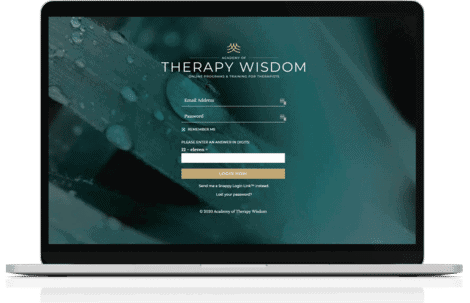
2. ACCESS TO THE ACADEMY OF THERAPY WISDOM MEMBERSHIP SITE
All your course materials in one easy-to-navigate platform, supported by our dedicated customer service team. Easy access to all the course material and recordings when it is convenient for you.

3. SYSTEMIC TRAUMA IN COUPLES THERAPY TAKEHOMES
Downloadable handouts and tools for you to keep and reference. Use these tools over and over from your own devices.
This Course is A Complete Experience.
These Bonus Interviews are Priceless:

1. Resmaa Menakem - We Will Not Perform
A few minutes before recording this session, as Akilah sat with her notes for the interview, she heard a voice within her that said: "There will be no performance. You will not perform."
She disposed of the agenda and what unfolded after this was an honest, generative, and authentic exploration between her and Resmaa about the ways in which BIPOC often perform as a coping strategy to deal with systemic oppression.
In this session, Akilah and Resmaa experientially explore performing and the very real pain attached to being drawn out of authenticity in order to fit into the wider system. They honor the struggle that many BIPOC face, especially in the field of Psychotherapy that doesn't always honor non-white knowledge. As they rumble with these issues that live in their own bodies, they note the power of "being" as a huge part of the revolution and wish to invite others to do the same.
Resmaa Menakem, MSW, SEP, is a healer, a longtime therapist, and a licensed clinical social worker who specializes in the healing of racialized trauma. Resmaa is best known as the author of the New York Times bestseller My Grandmother's Hands: Racialized Trauma and the Pathway to Mending Our Hearts and Bodies, and as the originator and key advocate of Somatic Abolitionism, an embodied antiracist practice of living and culture building.
2. adrienne maree brown - LIBERATION AND IMAGINATION: HOW WE CAN THINK DIFFERENTLY ABOUT OUR WORK
In this session, Akilah and adrienne examine how the concept of fractals can help us to understand the work we do with couples. They explore the role that relationship interactions play in daily liberation. Listen to them discuss imagination, the imagination battle, and the role of both in transforming ourselves and the world. Join them as they guide you to reflect on the power of demystifying our work in order to support our client's imagination.
adrienne maree brown grows healing ideas in public. Through her writing, her music, and her podcasts, adrienne has nurtured Emergent Strategy, Pleasure Activism,and Radical Imagination and Transformative Justice as ideas, frameworks, networks and practices for transformation.
Her work is informed by 25 years of social and environmental justice facilitation primarily supporting Black liberation, her path of teaching somatics, her love of Octavia E Butler and visionary fiction, and her work as a doula. She is the author/editor of several published texts including Emergent Strategy: Shaping Change, Changing Worlds, Pleasure Activism: The Politics of Feeling Good, and Grievers, and Maroons.


3. Sitting with the Cracks: Rethinking Trauma, Healing and Justice - A Conversation with Báyò Akómoláfé
Join Akilah and Báyò as they enter the BAYO-sphere to discuss the politics of trauma, psychology, and healing. Báyò - masterful at peering into the cracks of what we assume to be broken or fixed - exposes the irony of trauma, privilege, and justice as reinforcing the very conditions we try to avoid. He encourages us to rethink the concepts of trauma or healing. And he invites us to explore so far from what we know that we become lost and untethered and, with any luck, find ourselves in a place we can't yet imagine.
Báyò Akómoláfé, Ph.D., is a widely celebrated international speaker, posthumanist thinker, poet, teacher, public intellectual, essayist, and author of two books, These Wilds Beyond our Fences: Letters to My Daughter on Humanity's Search for Home, and We Will Tell our Own Story: The Lions of Africa Speak.
Báyò is the Founder of The Emergence Network and host of the online postactivist course, 'We Will Dance with Mountains'. He currently lectures at Pacifica Graduate Institute, California, and University of Vermont, Burlington, Vermont. He sits on the Board of many organizations including Science and Non-Duality (US) and Local Futures (Australia).
4. The impact of systemic trauma on the sexuality of minority groups with Rafaella Smith-Fiallo
In this session, we examine the following:
- The ways in which the body is the first site of oppression, and the need for minority groups to reclaim their bodies;
- The ways in which systemic trauma exists as a form of sexual trauma;
- The sexuality of racial minorities, and the ways in which stereotypes and tropes affect self-understanding and expression;
- The practice implications.
Rafaella Smith-Fiallo, LCSW (she/ella) is a Licensed Clinical Social Worker, sexual liberation activist, and therapist specializing in relationship, sex, and trauma therapy. She owns Healing Exchange LLC, a therapy private practice, and co-founded Afrosexology, a sex-positive, pleasure-based sexuality multimedia education business. She's been featured in numerous media outlets like NY Times, The Washington Post, Vogue, Vibe Magazine, Broadly, HuffPost and others. Additionally, she has worked in the field of suicide prevention and crisis intervention in civilian and veteran populations, and in inpatient, outpatient, and community mental health settings.


5. The Neurobiology of Historical Trauma and Minority Stress - A Conversation with Juliane Taylor Shore
Jules and Akilah examine the impact of both historical trauma and systemic trauma on the brain. They look at the way in which these effects are expressed in the couples relationship. They also address how we can use couples therapy to generate new neural experiences for minority groups.
Juliane Taylor Shore, LPC, LMFT, SEP (AKA Jules) is a therapist and trainer of therapists in Austin, Texas. She specializes in applying Interpersonal Neurobiology to the healing of trauma and the creation of relational health with clients she sees. She uses her knowledge of the brain and the implicit mind to go decisively to the root of the issue with gentleness and depth.
6. Repairing Rupture with Minoritized groups: What to do when you lose your lens with John Edwards
This session is designed to help support therapists who lose sight of the systemic lens when working with clients. They will be helped to:
- Recognize their privilege and how it gives them the ability to do work devoid of a context;
- Remind themselves of how hypervigilance shapes the way LGBTQIA+ communities and BIPOC folx experience the world, and that any modality that does not hold space for that hypervigilance is marginalizing;
- Interrogate the modalities they use and unearth their cis-het white assumptions;
- Ensure that their physical space engenders a sense of agency and safety for minoritized groups;
Re-ground themselves and learn from the many intrinsic resources the client possesses for healing.
John was born in Guyana, South America, and currently maintains a full time private psychotherapy practice in Oakland, CA with specialities in treating Addictions, Anxiety, Depression, Eating Disorders, Trauma and Couples/Relationships. He has over 30 years post-masters experience and is an international Brainspotting Trainer and consultant, trained directly by David Grand, PhD, Founder and Developer of Brainspotting. John is the first Black/African American male psychotherapist in the world to become a Certified Gottman Method Couples Therapist.


7. UNDERSTANDING RESISTANCE AS FAILED COLONIZATION: CONFRONTING SELF IN THE THERAPEUTIC ALLIANCE WITH MINORITIZED GROUPS WITH TRACIE ROGERS
Most therapists have been taught that resistance is a "normal" part of our client's process. There is often an underlying tone of blame in our case formulations when we employ the term resistance. The client is the culprit who has erected walls of resistance, and the aim of the therapeutic work is to demolish these walls.
What if we reframed resistance using a decolonial lens? What if we shifted from examining resistance as the client's unwillingness to engage? What would we open ourselves to learning and unlearning if we interrogated our unwillingness to engage with clients from minoritized groups?
In this one-hour dialogue, Tracie explores how we can unintentionally create abusive dynamics in the therapeutic relationship when we do not practice from a place of awareness grounded in the reality of the systems of oppression in which we have all been socialized. She then outlines core tasks that we must rumble through if we are to decolonize our practice specifically when it comes to behaviours and approaches we typically label as "resistance."
Tracie Rogers is a psychotherapist with formal training in social work and expressive arts therapies. She is the owner and managing director of Wholeness and Wellness Counselling Services Limited - a group private practice staffed by a range of professionals including a clinical social worker, sexologist, and clinical and counselling psychologists. Tracie has worked as a mental health professional for 19 years with a focused practice on psychosocial support for members of marginalized groups. She works with individuals and couples as well as provides clinical supervision for mental health professionals.
8. The Narcissism of Our Field: Power, Privilege and Politics in Mental Health Education - a conversation with Stan Tatkin
In this special conversation, Akilah Riley-Richardson and Stan Tatkin engage in an honest conversation to examine the field of psychotherapy and its effect on marginalized people. They grapple with the questions: How can therapists undo injustice and marginalization? How can therapists center the knowledge of those who don't have access?
Join Akilah and Stan as they discuss the field's assumptions, name the privilege and access of thought leaders, and name the ways in which knowledge has been colonized. They touch on the politics of the field, its blindspots, and the epistemological and ontological crises that the field faces. Most importantly, they explore what we are now called to do.
Stan Tatkin, PsyD, MFT, is a clinician, author, researcher, PACT developer, and co-founder of the PACT Institute. Dr. Tatkin is an assistant clinical professor at UCLA, David Geffen School of Medicine. He maintains a private practice in Southern California and leads PACT programs in the US and internationally. He is the author of We Do, Wired for Love, Your Brain on Love, Relationship RX, Wired for Dating, and co-author of Love and War in Intimate Relationships, and the upcoming In Each Other's Care.


9. Interrogating the Pervasiveness of White Supremacy in Psychotherapy Practice with Joseph Winn
This session with Joseph uncovers:
- Power, privilege & clinical practice;
- Understanding the connections white supremacy & settler colonialism;
- Moving from 'comfortable stagnation' to 'uncomfortable growth';
Adding critical social theories to clinical practice (Queer theory, Critical Race theory, Crip theory); - Working with racism, classism, heteronormativity, ageism & ableism in relational therapy;
- Expanding the field of therapy to reflect the realities that the political is always clinical.
Joe Winn is a licensed independent clinical social worker, an AASECT certified sex therapist, and certified supervisor of sex therapy. He has lectured nationally and internationally on topics such as problematic sexual behavior, applying queer theory and anti-racist practice in psychotherapy, and making psychotherapy therapy more accountable to marginalized communities.
Here's what You'll Learn in
Systemic Trauma in Couples Therapy
Session 1: Understanding the Foundation of Work with Minorities, and the P.R.I.D.E. model
.Therapy with marginalized couples and partnerships cannot simply mirror work done with other clients who benefit from various forms of privilege. This work requires an acknowledgment of the inequalities and the relational dynamics of marginalized couples. In this session, we will address the critical underpinnings that shape work with racial and sex minorities, and discuss the various forms and manifestations of systemic trauma that are experienced by these couples and partnerships. We will also begin to understand the critical role that the P.R.I.D.E (Pivoting, Rumbling, Imagining, Developing and Evolving) approach can play in liberatory work with marginalized people.
In this session, you will learn:
How to practice and integrate Liberation psychology and epistemological hybridism into your work
The various types of trauma experienced by racial and sexual minorities
The ways in which therapists can possibly be perpetrators of "clinical marginalization" and clinical racism
How to undo "clinical marginalization" via the P.R.I.D.E. model
The four phases of working with marginalized couples and partnerships
The role of emergence in working with marginalized couples and partnerships
A reflection exercise in Epistemological Hybridism


Session 2: Relational Interrogation (Part 1)
Minoritized groups are often denied life experiences that will allow them to develop safe, intimate relationships with their partners. In fact, injustice that is experienced outside of the relationship can show up in many ways within their own relationships. For marginalized couples and partners, intimacy is often experienced as an elusive privilege. In this session, Akilah will introduce and examine the concept of "Relational Privilege." Additionally, she will discuss the six frames of Relational Interrogation used to assess the degree of relational privilege and the impact of systemic harm, which can give us some insight into the degree of relational privilege held by the couple. The first three frames will be explored thoroughly in this Session.
In this session, you will learn:
The components of the Relational Privilege Wheel
Managing and outing the therapist's own relational privilege
The idea of Relational Injustice
How to use Frames One to Three of the Relational Interrogation framework for assessing the impact of systemic trauma on the couple's/partners' dynamics
How to integrate epistemological hybridism and epistemic embracing into the assessment process
Session 3: Relational Interrogation (Part 2) and Responsible Externalizing
The purpose of this session is to examine Frames Four to Six and their role in assessing Relational Privilege and the impact of Systemic Trauma on connection and intimacy. In this session, Akilah will also explore how to help couples and partners connect their microdynamics to wider systemic change, and to use this as a source of motivation for their own transformation. The concept of Responsible Externalizing as a critical tool in assisting couples to begin releasing the burden of systemic trauma on their relationships will also be discussed.
In this session, you will learn:
Using Frames Four through Six of the Relational Interrogation framework to understand the impact of systemic trauma on the couple
Co-constructing motivation with clients as an enactment of political and relational empowerment - from Micro to Macro
Teaching Responsible Externalizing (interweaving critical consciousness and I-thou consciousness)
How to practice "Epistemic embracing" during the assessment


Session 4: Treating the Trauma and Building Liberatory Connections and Intimacy (LCI), Part 1
In this session, Akilah examines three methods of trauma work to treat the couple's experience of systemic harm. Because systemic harm never ends, there is a need to do continuous trauma work with the couple and partners. Akilah also begins to explore three of the seven frames for Liberatory Connections and Intimacy (LCI) to help clients build healthy relationships.
In this session, you will learn:
Using the ICN (Intergenerational Compassionate Network) in trauma work
Integrating the SOMOS model in trauma work
Developing Relational Healing Circles
Defining the concepts of Supportive & Common Dyadic Coping and defining Liberatory Connections and Intimacy
Building Relational Privilege and Liberatory Connections and Intimacy Strategies One to Three: "Identity and Interpersonal Cherishing," "Boundaries Within and Around," and "Decolonising the Relationship"
Session 5: Building Liberatory Connections and Intimacy, Developing Relational Privilege, Part 2
In this session, Akilah will examine Strategies Four to Seven that can help marginalized couples and partners deepen their intimacy in the face of systemic oppression. She also discusses and practices the process of Relational Declarations.
In this session, you will learn:
Tools to build healthy intimacy using Liberatory Connections and Intimacy Strategies Four to Seven: "Halting the Dance of the Stereotypes", "Relational Imagination", "Direct Requests" and "Building Relational Resilience"
How to make Relational Declarations
Relational Naming
A reflection exercise in Epistemological Hybridism

Two special pre-recorded sessions, titled, Allyship is a Verb, and hosted by Terri Delaney, MSW, LICSW, SEP, are available for therapists who want to examine what allyship means around issues such as racism, homophobia, transphobia and other types of discrimination.
"As a white therapist Akilah's teachings gift deeper insight to my client's experiences and inform how I can more responsibly tend to the systemic effects of racism in the couples therapy space. I look forward to continuing to train with Akilah and highly recommend training with Akilah to colleagues."
- Rebecca W.

Our courses are at the intersection of psychotherapy, spirituality and social change.
We know you have options for learning and Continuing Education. Here’s what sets us apart:

Emphasis on Your Learning
We offer a friendly, intuitive learning portal designed specifically so you can easily find your course content, connect with your colleagues, and have fun actually completing it!

Professional Production Quality
A real camera crew with high-end equipment, a deeply involved content director who works closely with every presenter, and a top-notch editing team with over 200 courses produced to date all make our video lessons second-to-none. Each learning module is split into digestible video segments so they are easy to watch and reflect on.

Unparalleled Customer Service
We're proud to maintain a customer happiness rating of over 90%, with 85% of inquiries responded to within 6 hours. We're here for you, every step of the way.
We ensure that your learning experience is not just adequate, but exceptional.
We believe learning should challenge and change you.
Here'S Everything You Receive With
Systemic Trauma in Couples Therapy

Plus, These Bonuses:
Full Training Valued at Over:
$700
ENROLL NOW
FOR ONLY
$347
Join Akilah Riley-Richardson for this Pioneering Course

If you are a BIPOC helping professional,
please accept our discounted enrollment price for this course by clicking here.
We are glad to have you with us!
AKILAH RILEY-RICHARDSON, MSW, CCTP
Akilah Riley-Richardson, MSW, CCTP is a published researcher, Relational Healing Facilitator, STAIR Method Certified clinician, couples therapist and Certified Clinical Trauma Professional. She has been a helping professional for seventeen years and has experience working with couples and persons practicing consensual non monogamy, both in the Caribbean and internationally. Akilah also specialises in work with sexual minorities and racial minorities. As an educator and facilitator, she has provided consultancy services to organizations such as NASTAD (National Alliance for State and Territorial AIDS directors), I-TECH (International Training and Education Center for Health) and CVC (Caribbean Vulnerable Communities). She has presented in various spaces including the Psychotherapy Networker Symposium, the Academy of Therapy Wisdom and the Black Mental health Symposium. She has been a Social Work Educator at the University of the Southern Caribbean since 2012. She is the founder of the Relational Healing Institute and creator of the P.R.I.D.E model.

100% Risk-Free Money-Back Guarantee
We are confident you will learn new skills in this online training. However, if during your first 7 days with this course, you don't believe you will learn anything to apply with your clients, please contact our support team at support@therapywisdom.comwithin 7 days of purchase and we will give you a full refund, no questions asked.

Once Again, Here's Everything You Receive with
Systemic Trauma in Couples Therapy
Plus, These Bonuses:
ENROLL NOW
Only
$147
Join Akilah Riley-Richardson for this Timely Course
If you are a BIPOC helping professional,
please accept our discounted enrollment price for this course by clicking here.
We are glad to have you with us!