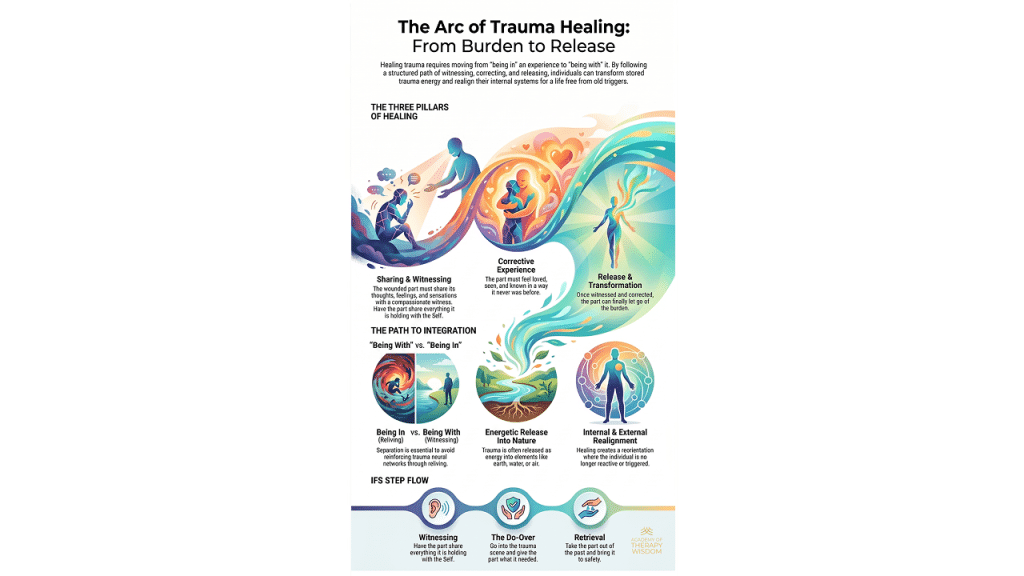

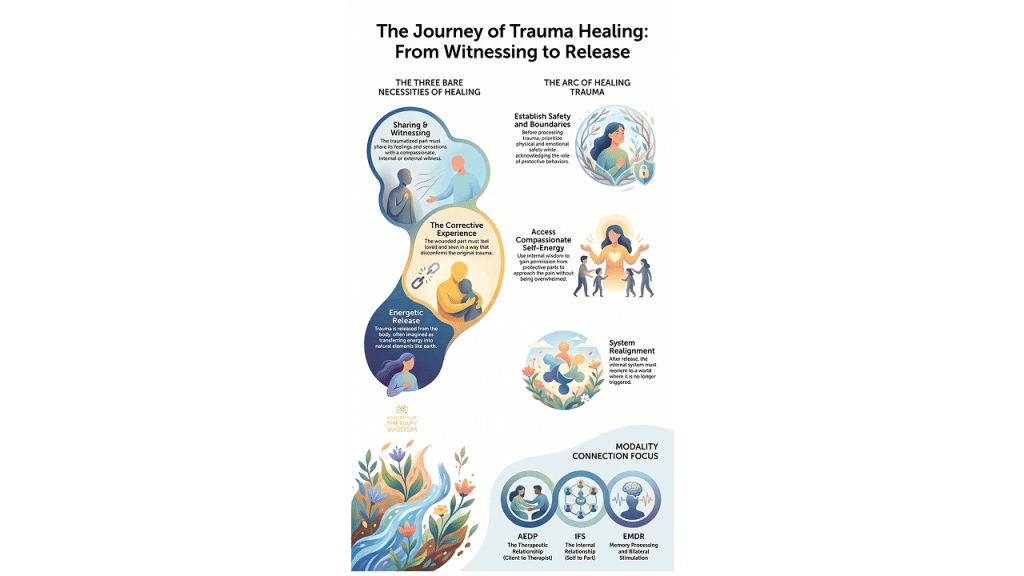
This post analyzes the non-linear nature of trauma recovery to help clinicians recognize that client movement between stages is a sign of nervous system capacity building rather than therapeutic failure.
Q: Is trauma recovery a linear process?
A: No, trauma recovery is completely non-linear. Clients do not move neatly from one stage to the next. Instead, they cycle back through earlier stages of safety and regulation as their nervous system develops the capacity to safely process deeper historical wounds.
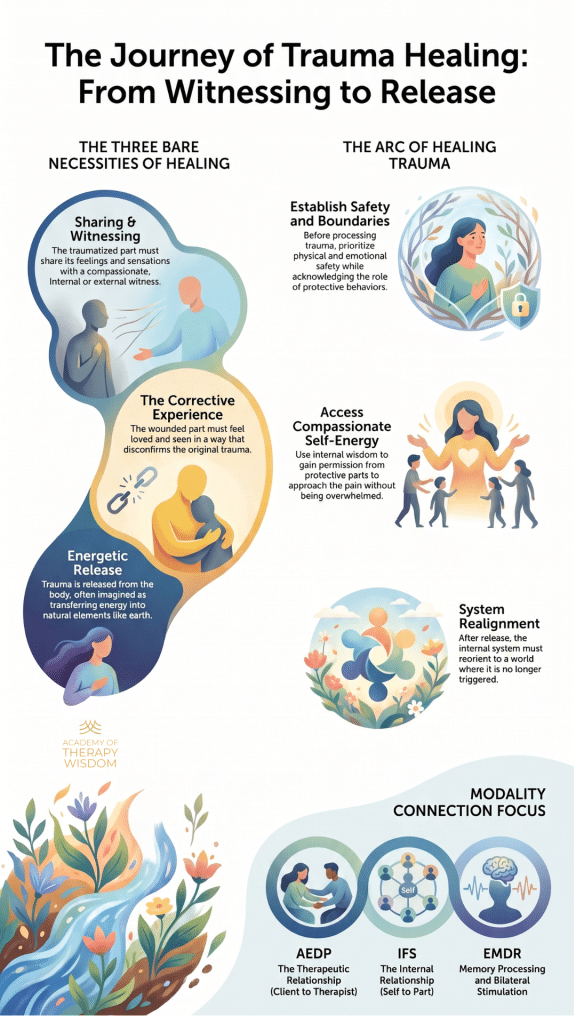
revisit earlier stages with deeper internal capacity.
Embracing the Messy Reality of Trauma Recovery
In our community of therapists, we often talk about the desire for clear, orderly progression. We want to see our clients move smoothly from distress to relief. Yet, anyone who sits in the therapist chair knows that trauma healing is a messy, winding road. Clients do not step cleanly from one phase to the next. They establish a sense of safety, take a few steps into deep emotional work, and then suddenly seem to slide backward into old defense mechanisms.
When this happens, it is easy for both the clinician and the client to feel a sense of discouragement. The client might think they are broken or that the therapy is not working. As clinicians, we might worry that we missed an important step or misread their readiness.
However, when we view this through a nervous system lens, we see something completely different. What looks like regression is very often the bodily system building the strength to handle things that used to be completely overwhelming. Revisiting an earlier stage of therapy with a fresh layer of awareness is actually a sign of growth. It means the client is now ready to look at their wounds from a position of greater stability.
The Nervous System as Our Clinical Compass
To support our clients effectively, we must look closely at how the body handles past threats. When a person experiences chronic unsafety, their physiology adapts to survive. These changes are not mistakes; they are brilliant protective strategies.
As healing begins, our primary goal is establishing a container of absolute safety. We cannot rush into processing deep wounds before the body feels secure in the present moment. This requires a deep understanding of concepts like neuroception, which is how the autonomic nervous system scans the environment for safety or danger without our conscious awareness.
When a client feels safe enough, their nervous system expands its window of tolerance. This expansion allows them to tolerate difficult sensations and memories without flipping into total hyperarousal or shutting down into dissociation. According to guidelines from the American Psychological Association, effective trauma interventions prioritize this stabilization phase to prevent re-traumatization.
When we respect the body’s timing, we allow the client to release trapped survival energy at a pace their system can actually integrate. This is why we must honor their protective adaptations rather than trying to strip them away. If a client becomes defensive or resistant, that part of them is simply trying to keep them safe.
Relational Safety and Disconfirming Trauma Expectations
Trauma isolates people. It teaches the brain that others are dangerous, unpredictable, or completely unreliable. Because of this, true transformation cannot happen through intellectual insight alone. It must happen within a live, relational experience.
The therapeutic relationship acts as a laboratory for new ways of being. Through compassionate witnessing and precise attunement, we offer our clients a corrective emotional experience. When a client expects judgment, abandonment, or coldness and instead receives warm, steady presence, their brain receives a powerful shock of new data.
This relational connection helps disconfirm the strict expectations formed during early abuse or neglect. According to neurobiological research shared by organizations like the Centers for Disease Control and Prevention, positive relational experiences are primary drivers of resilience and physiological recovery from developmental adversity. We are helping our clients wire new neural pathways that say, “It is safe to be seen, and it is safe to connect.”
Integrating Somatic and Parts Work Modalities
Our clinical work becomes much more effective when we combine modern neuroscience with experiential modalities. Traditional talk therapy often falls short because trauma lives in the primitive, non-verbal areas of the brain and body.
Using an approach like Internal Family Systems allows us to meet different aspects of the client’s psyche with immense compassion. Instead of fighting against a client’s destructive behaviors, we can ask what that specific part is trying to accomplish. We can help the client connect with their own internal stability, allowing vulnerable parts to speak without overwhelming the entire system.
Similarly, somatic therapy teaches us to read the language of the body. We watch the client’s breath, their posture, and the micro-movements of their hands. By bringing conscious awareness to these physical patterns, we help them complete frozen defense responses and safely discharge old stress. Whether we use EMDR, AEDP, or tracking models based on polyvagal theory, our goal remains the same: helping the nervous system recognize that the danger is over and that the present moment is safe.
Shifting Our Clinical Questions
If we want to align ourselves with the true nature of healing, we have to change the questions we ask in the treatment room. Instead of asking how we can push past a block or move on to the next phase, we need to slow down.
We must learn to ask: “What does this specific part of the client need right now to feel safe enough to heal?”
When we shift our focus from speed to safety, the pressure evaporates. We stop judging our clients for having a difficult week, and we stop judging ourselves as facilitators. We recognize that every loop back to an old pattern is an invitation to heal that pattern at a deeper level. This non-linear perspective transforms our practice, turning moments of apparent stagnation into profound opportunities for lasting neurological and emotional transformation.
Frequently Asked Questions
How can I explain the non-linear nature of healing to a client who feels discouraged by their progress?
You can use the analogy of a spiral staircase. Explain to them that even though it feels like they are passing by the exact same difficult emotions or reactions, they are actually standing one level higher than before. They are looking at the issue with more tools, more awareness, and a stronger therapeutic relationship to support them.
What should I do when a client experiences a sudden wave of dissociation during a session?
When a client experiences dissociation, their system has exceeded its capacity to process input. Immediately pause any trauma exploration and focus entirely on grounding. Use simple somatic prompts, such as tracking objects in the room or feeling the weight of their feet on the floor, to bring them safely back into the present moment.
How do we know when a client is truly ready to move from stabilization to processing traumatic memories?
Readiness is indicated by an expanded capacity for self-regulation and a stable therapeutic alliance. The client should be able to notice distress in their body without immediately flooding or shutting down. Tracking their physical responses during minor stressors gives you an excellent map of their current boundaries.

Join Free Webinar with Frank Anderson
Therapy for Forgiveness After Trauma with Frank Anderson
Helping Clients Gently Forgive Themselves and Others for Lasting Recovery
In this free Webinar, Frank Anderson will teach you:
Forgiveness as a path to peace and resilience.
Forgive without excusing harm; honor truth and boundaries.
Practice self-forgiveness to soften self-criticism.
Forgiveness eases trauma, supports recovery, and relationships.