Module I
Social Justice, Self Compassion, & Shame Resilience
In this session, Deran explores what gets in the way when individuals have intentions of becoming more actively involved in social justice. Using a non-judgmental approach, she discusses the common emotions (i.e., blame, shame, and guilt) and teaches methods to embrace them with care and compassion. She builds the foundation and container needed to show up and do this uncomfortable work by committing to everyone being “a learner, not a knower.”
In this session, these topics are discussed:
- How perfectionism, self-righteousness, criticism, fear, guilt, blame, and denial get in the way of maintaining curiosity
- The internal experience of shame and associated psychological defenses
- Utilizing communal support and self-compassion for endurance in anti-oppression and social justice
- The Learning Zone Model, developed by psychologist Lev Vygotsky, applied to anti-racism
- The Enneagram perspective of understanding parts of our personality as it relates to fears, unconscious motives (i.e., shadow), and guidance on personal development
Module II
Prejudice, Power & Privilege: “We are all Ken’s & Karen’s” with Guest Rebecca Ching
“These cycles of oppression leave scars on the victims and victors alike, scars that embed themselves in our collective psyches and are passed down through generations, robbing us of our humanity. . . . We must return and claim our past in order to move toward our future.”
— Dr. Joy DeGruy, author of Post Traumatic Slave Syndrome
Like slavery, many legal and judicial structures directly or indirectly limit the power of African Americans and separate poor and minority populations from whites. In this module, we define terms commonly used in anti-oppression work and personalize how we each have been conditioned by systemic oppression. We will begin to unpack the intergenerational trauma associated with the legacy of White Supremacy Culture. Utilizing Dr. Ken Hardy’s theory of “privileged vs. subjugated selves,” we will untangle the concept of intersectionality and discuss how some “parts” of our identity hold experiences of power and privilege, while other parts can simultaneously hold experiences of systemic oppression.
In this session, we will discuss:
- Various aspects of culture and the intersections between identities of privilege and identities of subjugation
- The intergenerational impact of subjugation
- How to identify the daily effects of white privilege and how “proximity to whiteness” often determines access to resources
- The tools of White Supremacy Culture that enable and perpetuate systemic oppression, fostering an “us vs. them” mentality
- The unique anti-blackness in the United States of America and its continued impact, especially among descendants of enslaved Africans
Module III
Legacy Burdens & Systems Thinking
“Trauma decontextualized in a person looks like personality. Trauma decontextualized in a family looks like family traits. Trauma decontextualized in people looks like culture.”
— Resmaa Menakem
A legacy burden is negative beliefs, memories, emotions, and energies passed down through the family line or culture. Racism, Patriarchy, Materialism, and Individualism are four collective legacy burdens that impact everyone living in the United States of America. These burdens are transmitted both overtly and covertly. Systems thinking prioritizes interconnectedness over individualism, and recognizes that all parts of a process, person, or community must be valued for the health and harmony of the larger system.
In this session, these topics are discussed:
- The IFS approach to embracing “parts” of a system to unburden the fears they carry
- Self Energy, unblending, YOU-turn, and unburdening
- The Drama Triangle, polarizations, and the interconnected nature of systems
- The theoretical basis of compassionate witnessing and corrective experiences in therapy
- Systems thinking as a shift in mindset, away from linear thought processes to circular and multidimensional
- Resmaa Menakem’s concept of clean pain (choosing integrity over fear and standing in that integrity to move forward toward the unknown) vs. dirty pain (responding to fear and conflict from our inner wounded child)
Module IV
Decentering Patriarchy & CisHet Privilege
My silences had not protected me. Your silence will not protect you.”
– Audre Lorde
Not unlike white privilege, “cisgender privilege” or “heterosexual privilege” are terms used to refer to the advantages that people receive for being treated as society’s default gender and sexuality “norm.” Decades of research show that LGBTQ+ia populations face a disproportionate burden of mental health problems, including depression, lower self-esteem, and substance use. LGBTQ+ia people are not inherently more prone to these challenges because of their sexual orientation or gender identity, but rather because they are discriminated against, victimized, shamed, and stigmatized by society. Heteronormativity perpetuates homophobia and transphobia, which is reflected in the thousands of violent acts towards members of the LGBTQ+ia community globally each day.
In this session, these topics are discussed:
- How patriarchy and cishet privilege are related
- Pioneers who initiated the fight against trans- and homophobia, spoke up, and encouraged others to fight for justice and respect
- Higher risk factors associated with BIPOC who identify as LGBTQ+ia
- Appropriate terms, language, and definitions to be better equipped in supporting members of the LGBTQ+ia community
Module V
The Cognitive Behavioral Impact of Poverty
“God never intended for one group of people to live in superfluous inordinate wealth, while others live in abject deadening poverty.”
— Dr. Martin Luther King, “Strength to Love,” 1963
Research shows that poverty is a collective experience of lacking and longing for resources. Studies indicate that our economic circumstance significantly impacts our behaviors and cognitive processes, and these are often passed down inter-generationally. An overwhelming amount of data has shown that experiencing poverty during childhood is associated with poorer mental and physical health outcomes. Thirty percent of those in the highest economic stratum of society were classified as mentally “well,” while only 4.6% of the lowest stratum experienced the same.
In this session, these topics are discussed:
- The nine vital resources that influence a person’s social and emotional wellbeing.
- How language and messaging impact self-esteem.
- The “Hidden Rules” of middle-class culture
- The culture of poverty as it relates to Adverse Childhood Experiences (ACEs)
- American privilege, survival of the fittest, and the colonial mindset
Module VI
Individualism, Isolation & Intergenerational Trauma
“Socialism for the rich, individualism for the poor.”
— Dr. Martin Luther King
American individualism developed as European colonizers’ took over land from the east to the west. “Rugged pioneers” operated in isolation and with very little infrastructure. These historic circumstances influenced our current attitudes and policies favoring individualistic freedom over community and collectivism. National programs such as the War on Poverty, War on Crime, Law Enforcement Assistance Act, and privatized prisons have further isolated marginalized people, incentivizing social service providers to ally with police departments, courts, and prisons, and introducing law enforcement measures into urban schools and public housing. Today, crime control and incarceration are America’s responses to poverty and inequality.
In this session, these topics are discussed:
- A comprehensive understanding of the school-to-prison pipeline
- Collectivism as a protective factor for suicidal ideation in individualistic societies
- Social isolation as a risk factor for poor life satisfaction across all domains and higher rates of substance use
- The intersection of criminal justice and mental health
- How the war on drugs perpetuates social inequality, mental health stigma, miseducation, and racist political propaganda
Module VII
Developing a Change Plan
“Wanna go fast, go alone. Wanna go far, go together.”
— African Proverb
Our individual and collective goals toward social justice will demand we continuously renew our commitment to reducing complicity while increasing our capacity for more therapeutic connections. To be effective in this work will require ongoing support, accountability, and reflection. The goal is to create greater access to resources in solidarity with systematically oppressed people so you can live authentically and wholeheartedly. Together we will create a plan for success to increase cultural humility and cross-cultural compassion.
In this session, these topics are discussed:
- Contemplation & Preparation vs. Action & Maintenance
- Ambivalence and stuck points to examine hidden fears or concerns
- The conceptual differences between diversity, equity, inclusion, and belonging
Module VIII
Integration & Application
“I believe in recognizing every human being as a human being–neither white, black, brown, or red; and when you are dealing with humanity as a family, there’s no question of integration or intermarriage. It’s just one human being marrying another human being or one human being living around and with another human being.”
― Malcolm X, The Autobiography of Malcolm X
Carl Jung argued that integration is the process during which both the individual and collective unconscious are integrated harmoniously into our personality. Integrating with integrity includes the ability to be fully honest and accurate about the intentions AND impact of one’s actions.
In this session, these topics are discussed:
- Tips for creating a life that is distinctively transformative in response to cultural segregation
- The need for racial affinity groups in anti-racism work
- Harvard’s Guide for White Affinity Groups
- Ways to identify “power over” vs. power within
- Circle-back prompts to facilitate relational repair and corrective experiences


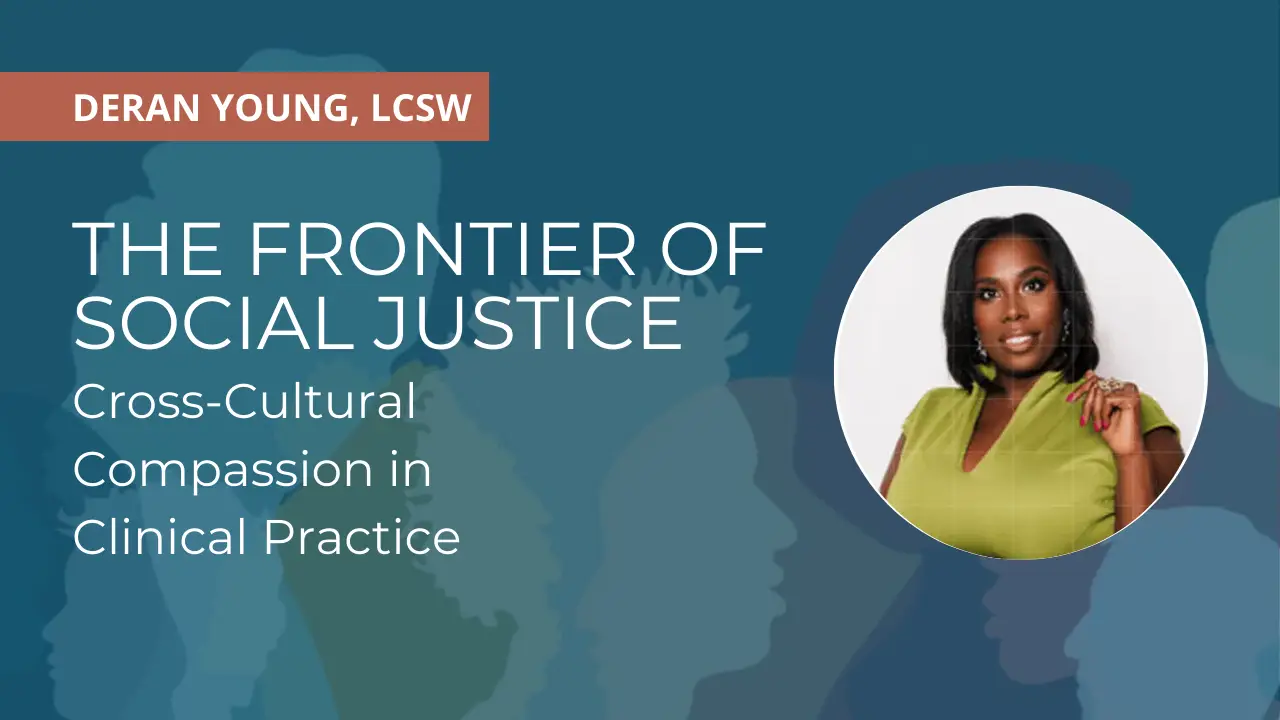
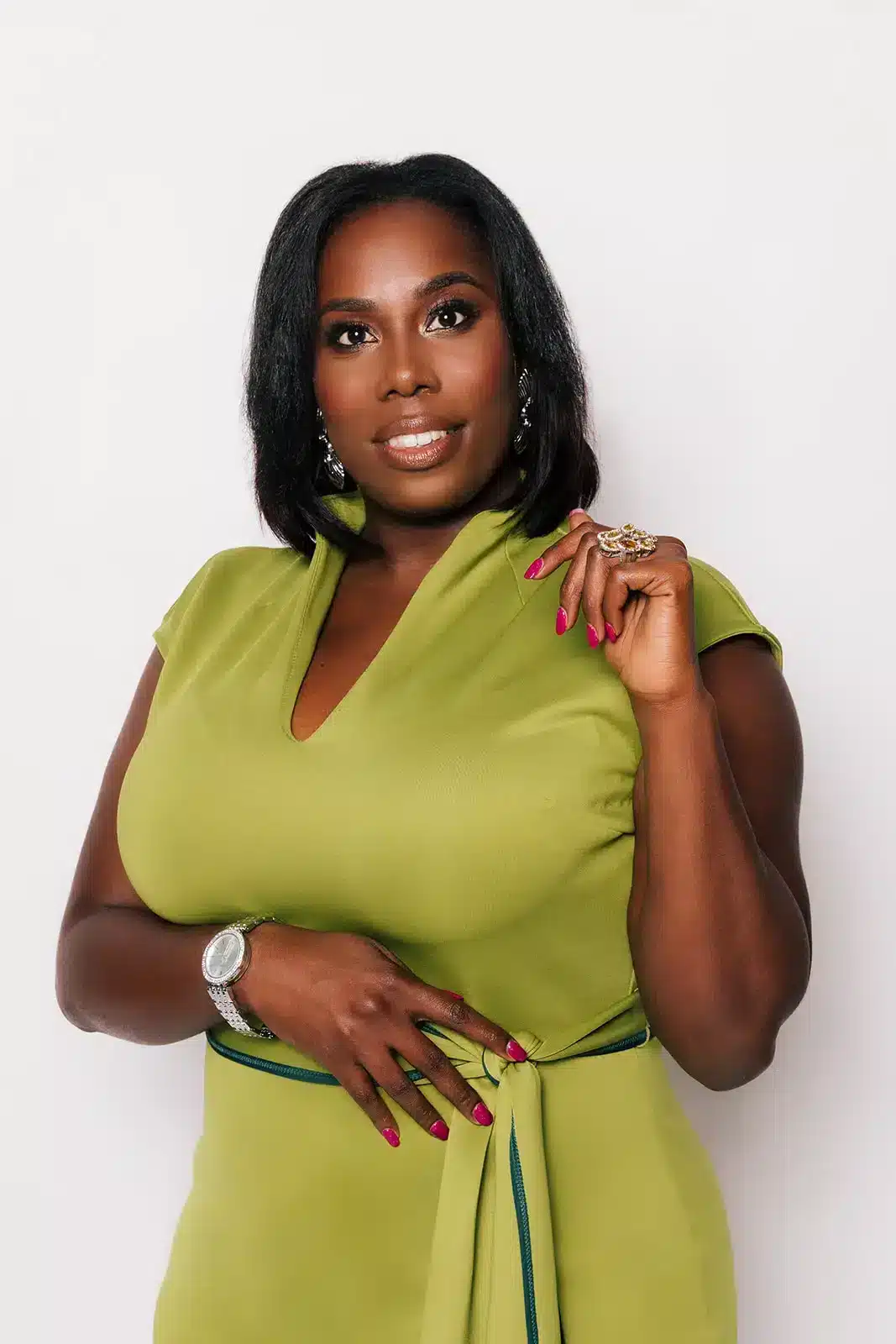
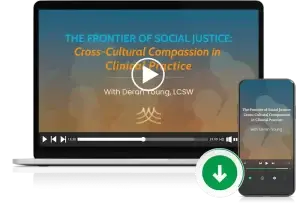
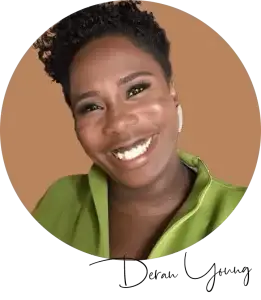 Deran Young, LCSW, is a licensed therapist specializing in racial trauma and legacy burdens. She is a co-author of the New York Times best-seller, You Are Your Best Thing. She’s a retired military officer and founder of Black Therapists Rock, a non-profit organization with a network of over 30,000 mental health professionals committed to reducing the psychological impact of systemic oppression and intergenerational trauma.
Reviews
There are no reviews yet.