Making the Case & Setting the Stage
First, we will define what intergenerational trauma is. We’ll discuss the rationale and motivation for offering an adult client who is also a parent the opportunity to focus on their relationship with their child as a way of interrupting the cycle of intergenerational trauma.
You will learn:
- What intergenerational trauma is so you can recognize and understand its power
- How focusing on the relationship with a client’s child will help your client feel better, happier, and more satisfied with their own life
- Who and when this intervention would be appropriate so you can introduce it to clients
- How to introduce this intervention to clients so you can help them transform their attachment wounds
Nervous system responses to the client’s child
In Module 2, you will learn about how the polyvagal theory helps us understand our strong negative emotions of fight, flight, and collapse. We will use the concept of the autonomic ladder to “map out” our reactions to our children in different conflictual or stressful circumstances. Then, we will learn how to respond to these states with calming techniques. A live demonstration will be shown.
You will learn:
- The polyvagal theory so you can understand why parents have strong negative responses to their child
- How to map out your own autonomic ladder to increase your self-awareness
- How to interpret the exercise so you can help clients become more familiar with their negative responses and develop skills to calm them
Working with Non-Conscious Beliefs
In this module, you will learn to help clients uncover the sensations that they have in their body as well as their non-conscious beliefs when they are in a conflictual situation with their child. Then, we will learn the practice of installing a message of self-compassion with an experiential ritual. This will be demonstrated by a live example. We will then discuss how this helps the client to become calmer and more grounded so they can connect with their child more effectively.
You will:
- Become aware of negative body sensations that arise when parents are in a conflict with their child
- Discover your non-conscious negative beliefs so you can work consciously with them
- Practice an experiential exercise that will install a message of self compassion within yourself
- Learn how to use that exercise to help calm and ground your clients so that they can be more available to connect with their child
Successful Parent-Child Communication
In the final module, you will learn how to guide clients to have more connected and peaceful conversations with their children, no matter their age. Therapists will learn about the PACE Attitude, which is a technique for conducting a successful conversation with a child. The PACE Attitude focuses on being an empathic and connected listener rather than giving advice, reassurance, or explanations to a child. Examples will be given for various types of interactions with children of various ages.
You will:
- Learn about the PACE Attitude and how you can apply it
- Become familiar with various uses and types of scenarios of the Attitude so it becomes an easily-used tool for you
- Develop ways for clients to experiment with the Attitude so you can troubleshoot if they aren’t sure they’ve done it right
- Integrate all of the techniques together so you can build a healing and connected relationship with a client and their child
- Reflect on how improving the relationship between parent and child helps adults with their own childhood history


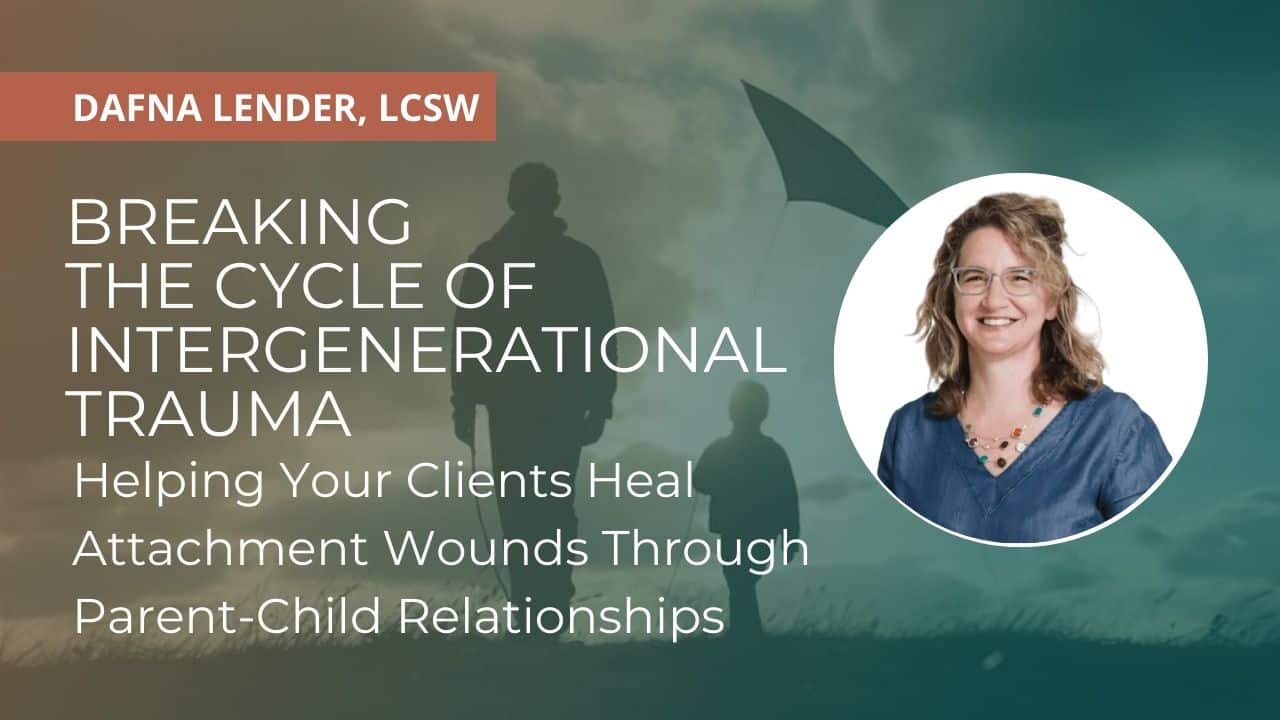


 Dafna Lender, LCSW, is an international trainer and supervisor for practitioners who work with children and families. She is a certified trainer and supervisor/consultant in both Theraplay and Dyadic Developmental Psychotherapy (DDP), as well as an EMDR therapist. Dafna’s expertise is drawn from 25 years of working with families in many settings: at-risk after school programs, therapeutic foster care, in-home crisis stabilization, residential care, and private practice. Dafna’s style— whether as a therapist or teacher — is combining the light-hearted with the profound by bringing a playful, intense, and passionate presence to every encounter. Dafna is the author of Integrative Attachment Family Therapy and co-author of Theraplay: The Practitioner’s Guide. She teaches and supervises clinicians in 15 countries and in 4 languages.


Reviews
There are no reviews yet.