Brain Integration and Treatment Planning
How we define mental health matters. Definitions of mental health and wellness have been largely defined by cultural norms and this has left those who do not fit those norms labeled in ways that have often been unhelpful and even harmful. In this module, we look at the possibility of defining mental health through a complex systems lens. You will learn how to make experiential treatment plans and learn about brain states that support change.
You will learn:
- To define mental health through lens of complex systems theory.
- How to assess how the client is responding to experiential therapy.
- What treatment plans lead to more flexible and fluid brain integration.
- To differentiate between treatment plan and how to maintain change states in experiential therapy
Core Skills of Power-With Experiential Work
In this module, we’ll focus on core skills of experiential work. We’ll discuss how power dynamics affect therapy and how to work with that reality to create spaces in which clients can more easily discover their power and wisdom. We’ll cover power-with- being in the clinical space that supports your client’s self-trust and experiences of empowerment, both of which have been found to be important predictors of positive therapeutic outcome.
You will learn:
- Interventions and skills that support your experiential work and brain integration.
- How to hold a co-empowered stance in a clinical setting.
- Techniques that help you refocus the work in the moment.
- The difference between micro contracting and marco contracting.
- The role of visceral sensations in emotion.
Witnessing Mind Skills: Teaching Your Client to Use Therapy and Be in Positive Relationship with Themself
In this module, we’ll discuss the regulating power of the witnessing mind. We’ll cover how to activate that system in the brain intentionally and how to differentiate between witnessing mind tracking and task oriented tracking. You will add experiential skills to your toolbox and you will learn how to teach your clients to use the therapy space to deepen their processes.
You will learn:
- How to identify the witnessing mind system in the brain.
- The neurobiological effects of systems on other brain processes.
- Techniques to help a client learn to track their body.
- How to talk to clients about the neurobiology of self-compassion.
Witnessing Mind and the Parts of Us
In this module, we’ll explore the core elements of parts work. Parts work is a valuable skill set because it helps clients connects with right brain implicit experiences so well. There are many parts work models and all of them share core elements. You will learn those core elements so that you can add parts work to your clinical work or deepen the parts work skills you already have.
You will learn:
- How to do a parts map intervention.
- How parts work can increase access to the witnessing mind system within the brain.
- How to create a space in which the client can see with depth the ways their subcortical brain made sense of the events in their history.
Undoing Aloneness: Adding Regulation through Therapeutic Presence
In this module, we’ll discuss the four core relationships that are the underpinning of solid therapeutic presence. We’ll explore how insights from polyvagal theory and neuroscience research into self compassion can support your relationship with yourself, your relationship with your work, and your availability to connect with clients in the hardest therapeutic moments.
You will learn:
- The autonomic nervous system as laid out in polyvagal theory.
- How the ANS warning state shows up for you within clinical situations.
- How self-compassion within the therapist will add to client regulation.
- The three core relationships that support therapeutic presence.
- How to build a personal practice that can be practiced both in and out of sessions to support your relationship with you.


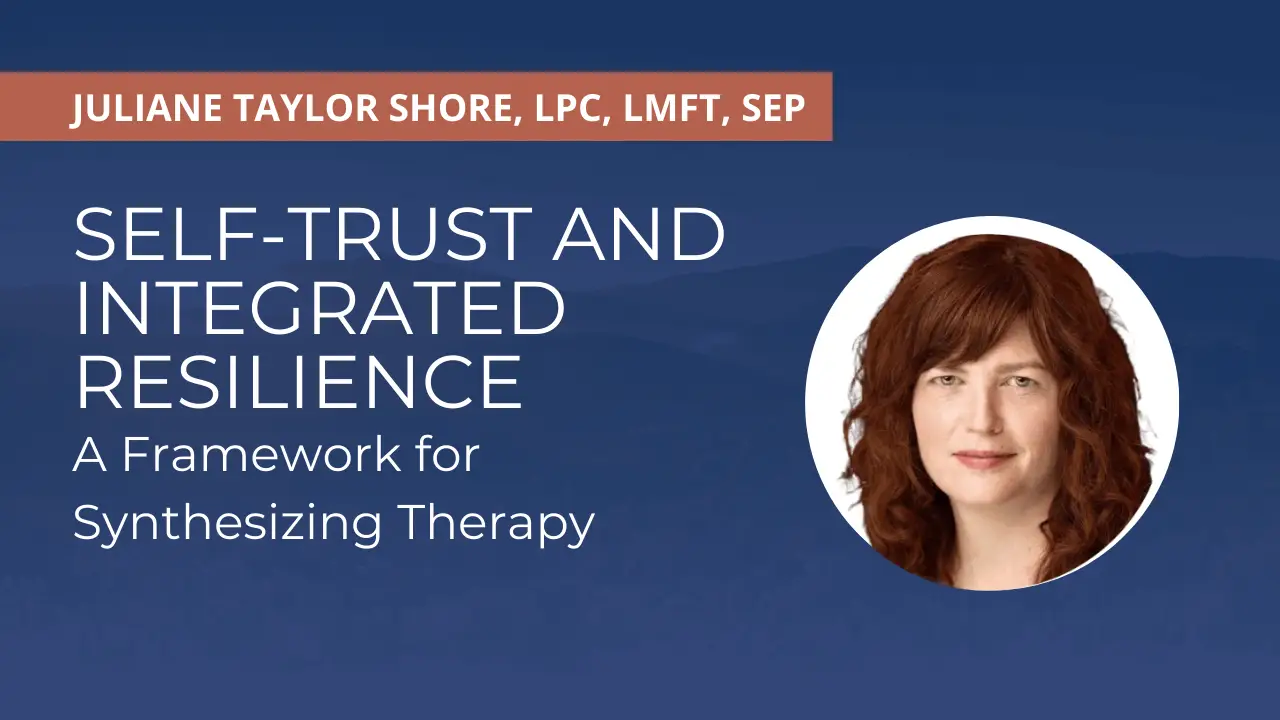










 With over 13 years of experience, Jules is uniquely qualified to show trauma therapists how and when to use their therapeutic tools to create the quickest, most profound changes.
Holly Herzog –
Jules is a gem. This training is packed with tools and insight, and is so dense that it has taken me months to absorb the modules. The practice parts built into the modules are genius, I am truly building skills I use with clients daily. I have been doing therapy for thirty years and this one course has changed my practice more than any other training I have taken. Great support, good info and a clear teacher = success. Thank you, Jules!
Bianca Gabay –
Taking STAIR Level 1 live with Jules Shore was such a meaningful experience for me as a newer clinician. I have never met an educator, guide, or human more invested in helping others learn, feel seen, and grow. The learning environment Jules creates is deeply grounding. No question feels silly, and being in her presence feels like a warm hug.
This training gave me exactly what I needed to begin building foundational practices for a profession that can feel both challenging and deeply rewarding. It brought new excitement, clarity, and energy into my clinical work, and I left feeling more connected to myself and my clients.
STAIR Level 2, here I come!
JP Licensed Independent Clinical Social Worker (6.5 years) –
This course has taught me the value of focusing on broader concepts and clinical principles over sticking to specific protocols alone. It perfectly blended teaching trainees concepts and providing practical skills they can immediately apply.
Samheet K, Clinical Social Worker-Supervisor (10 years) –
Excited about continued learning which will no longer end for me with simply taking the course, I am still digesting the content and finding myself growing in ways I didn’t know to be possible.