
The Neurobiology of Feeling Safe
Level 2
Safety Within and Between
With Juliane Taylor Shore, LPC, LMFT, SEP

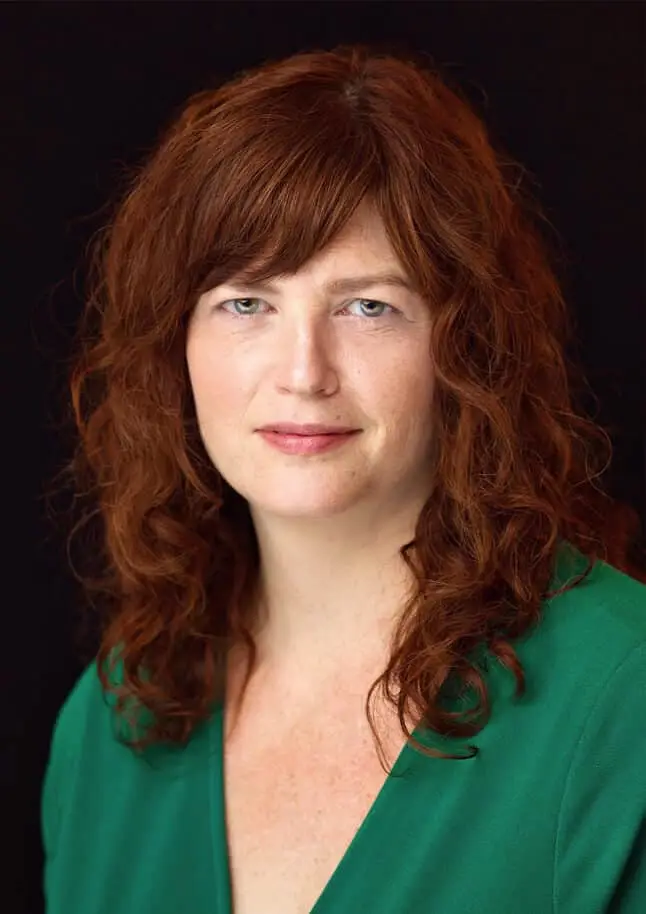
Every day I get better - as a person and as a therapist. I feel relaxed as a therapist - I don't have to have the answers because I know my clients do.
My boundaries are intact.
I feel better at the end of every day than when I started.
-Jules Taylor Shore
Hello,
When we feel safe, we are able to take risks.
It may seem counterintuitive. You'd think we'd want to keep everything the same when we feel safe, and only dare to make changes when we're in danger. But when we are afraid, our own brains work against us. And that limits our ability to avoid more peril.
Our role as therapists is to help clients get out of their stuck and scary places and help them establish safety so they can try new behaviors.
In Jules' foundational course, The Neurobiology of Feeling Safe: Working with Boundaries Inside and Out, you learned that boundaries are key to helping our clients - and ourselves - feel safe.
But boundary work isn't always easy.
So now what do you do?
The Neurobiology of Feeling Safe Level 2: Safety Within and Between looks at the complexity of boundary work. And it gives you more tools to create real, lasting change in your sessions.
You'll cover the following topics:
Module 1: Boundaries and Parts Work
Module 2: Using Boundaries with the Inner Community
Module 3: Boundaries and Couples Work
Module 4: Boundaries and the Therapist
In each module, you will learn how to employ the science of neurobiology alongside internal parts work. This will greatly enhance the boundary work you are already doing.
Each module includes recordings of Jules working with her clients. You get to see the framework she uses to set up the session, see her in action, and discuss what happened in each session.
This course will help if you are struggling with interventions that don't go as planned. Or if you feel stuck applying boundary work in your practice. Most of all, you will find here the skills you need to calm your own nervous system - so you too can feel present and safe.
Our goal is to help therapists help their clients have a safer, more integrated neurological experience, so they can enjoy their relationships, creativity, and communities more fully.
If you are ready to expand the exponential benefits of boundary work, please join us today.
Warmly,
Academy of Therapy Wisdom
Juliane Taylor Shore, LPC, LMFT, SEP
Why more boundary work is necessary
The Neurobiology of Feeling Safe Level 2: Safety Within and Between deepens the understanding and application of boundary work that was learned in The Neurobiology of Feeling Safe: Working with Boundaries Inside and Out. In this new level-two course, therapists will learn how to:

"The clarity and accessibility of the descriptions of brain function that Jules provided have transformed my understanding. The outcomes are immeasurable. I am able to make sense of so much that was previously woolly. I can explain concepts - such as the way in which our 'history channels' constantly tweak our experience of the present moment - with a renewed confidence."
- Mary
The Benefits of Healthy Boundaries for Therapists

Therapists don't just teach boundary work to their clients; therapists are actively working on their own boundaries when they apply this work. Therapists who have healthy boundaries…
Here's everything that's included with
The Neurobiology of Feeling Safe Level 2: Safety Within and Between

1. Four in-depth teaching modules
2. Four recorded training calls with Jules


3. Private membership site
4. Downloadable videos & transcripts

Plus, these special bonuses:
1. Working With Boundaries With People From Different Cultures: A panel discussion with Akilah Riley-Richardson, Hedy Tan, Desirae Ysasi, and Sanaa Hyder
This conversation will help you reflect and stretch yourself as you think about working with clients from diverse backgrounds and experiences. Jules and her panelists will share thoughts, feelings and experiences of working with clients from different cultural backgrounds around the subject of boundaries. How do you approach boundary work with clients whose background is very different from yours? Are there things to stay aware of when working with clients on boundaries when they come from different cultural backgrounds? This will be a conversation amongst clinicians about things to keep in mind, what these clinicians think about when it comes to boundary work, and ways they have grown over the years.


2. Boundaries in Open Monogamy: An interview with Tammy Nelson, author of 'The New Monogamy"
Join Jules as she talks with sex and relationship expert Dr. Tammy Nelson about boundaries in relationships. Jules and Tammy will talk sex, love, passion, intimacy and open monagamy. Discussions will include the importance of differentiation in establishing secure and deep connections between partners, how to do internal boundary work to make hard talks easier, and ideas about how to navigate boundary conversations on the monogamy spectrum. Their discussion will give you ideas on how to help your clients increase their compassion, empathy and intimacy by looking at how boundaries bring people closer together.
3. Pre-session Module
Jules provides a review of her foundational course, The Neurobiology of Feeling Safe, answers common questions that came from that course, and shares tapes of client sessions to demonstrate the work in action.


4. Special Recorded Integration Session
A 1-hour recorded integration call with Jules, devoted to answering your questions about the course and your boundary work.
Here's what You'll Learn Inside
The Neurobiology of Feeling Safe Level 2: Safety Within and Between
Module 1: Boundaries and Parts work
In this session, we will dive into the neuroscience of parts work. We will work with identifying and differentiating parts so that you can work with your clients with internal boundaries with their parts, without any previous knowledge of parts work. You will learn about a tool called Parts Mapping. And you will see all of the interventions in action with recordings from real sessions.
You will learn:


Module 2: Using Boundaries with the inner community
In this session, we will be working with the four boundary levels - physical, psychological, containing, and executed - to support internal parts work to increase self-compassion and inner integrity. Again, you will see all of the interventions in action with recordings from real sessions.
You will learn:
Module 3: Boundaries and couples Work
In this session, we will explore boundaries within couples work. Lots of demo tape and ideas about how to apply the four layers of boundary work to couples work.
You will learn:


Module 4: Boundaries and the Therapist
In this session, we will discuss psychological, containing, and executed boundaries with the therapist to increase efficacy and ease of therapeutic stance.
You will learn:

Our courses are at the intersection of psychotherapy, spirituality and social change.
We know you have options for learning and Continuing Education. Here’s what sets us apart:

Emphasis on Your Learning
We offer a friendly, intuitive learning portal designed specifically so you can easily find your course content, connect with your colleagues, and have fun actually completing it!

Professional Production Quality
A real camera crew with high-end equipment, a deeply involved content director who works closely with every presenter, and a top-notch editing team with over 200 courses produced to date all make our video lessons second-to-none. Each learning module is split into digestible video segments so they are easy to watch and reflect on.

Unparalleled Customer Service
We're proud to maintain a customer happiness rating of over 90%, with 85% of inquiries responded to within 6 hours. We're here for you, every step of the way.
We ensure that your learning experience is not just adequate, but exceptional.
We believe learning should challenge and change you.
"Jules has a beautiful gift of taking difficult to understand or complex material and translating it a digestible, concise manner. Her vast knowledge and skill have energized and inspired me to approach my work in a very different way. I feel more equipped in the room with my clients and though I have much more learning and growing to do both professionally and personally, I am immensely grateful for how she has consolidated and streamlined research, technique, and theory into something actually applicable in the room with people. Additionally, she created the most emotionally safe, inviting, connected training space I've experienced in my 12+ years as a therapist."
- Natalie
Here's what you receive with
The Neurobiology of Feeling Safe Level 2: Safety Within and Between

1) Four Prerecorded Teaching Modules
2) Four Recorded Training Calls - 2 hours each, including 45 minutes of presentation, a 45-minute consult, and 30 minutes of Q&A
3) Private Membership Site
4) Downloadable Videos and Transcripts to Add to Your Library
PLUS THESE SPECIAL BONUSES:
1. Working With Boundaries With People From Different Cultures: A panel discussion with Akilah Riley-Richardson, Hedy Tan, Desirae Ysasi, and Sanaa Hyder
2. Boundaries in Open Monogamy: An interview with Tammy Nelson, author of 'The New Monogamy"
3. Pre-session Module: A review of The Neurobiology of Feeling Safe
4. Special Recorded Integration Session
ENROLL NOW
Payment of
$497
$397
Join Juliane Shore for The Neurobiology of Feeling Safe Level 2

If you are a BIPOC helping professional,
please accept our discounted enrollment price for this course by clicking here.
We are glad to have you with us!
Meet Your Presenter...
Juliane Taylor Shore, LPC, LMFT, SEP
Juliane Taylor Shore, LPC, LMFT, SEP (AKA Jules) is a therapist and trainer of therapists in Austin, Texas. She specializes in applying Interpersonal Neurobiology to the healing of trauma and the creation of relational health with clients she sees. She uses her knowledge of the brain and the implicit mind to go decisively to the root of the issue with gentleness and depth.
Jules has been a specialist in trauma recovery and in couples counseling for 12 years, and loves to work experientially because that is how to meet and invite shifts in the implicit mind. She wants to help people find the love, connection, and grace they have always longed for, both in themselves and with each other.
In addition to seeing weekly clients and teaching, Jules offers intensives for couples and for individuals who come from all over to do in-depth work in a brief format.


100% Risk-Free Money-Back Guarantee
We are confident you will really enjoy and benefit from this online training. However, if you are not 100% satisfied with your purchase, please contact our support team at support@therapywisdom.com within 7 days of purchase and we will give you a full refund, no questions asked.
Testimonials
Jules has a unique power to connect with other humans. Whoever has the good fortune to study her work should definitely do so.
- Abe
The first course I took with Jules, Neurobiology with Heart, in the beginning of this year brought me to a sense of safety I had never felt before in my time on earth. Her notion of the psychological floor... wow. I am further exploring this sense of safety and all my parts with IFS.
- Kat
Every training session, my pen or typing skills have a hard time keeping up with all of the wealth of information she shares from most all therapeutic frameworks, interpersonal neurobiology (IPNB), Polyagal, Somatic and the most recent and relevant research. I have been training with Jules for 5 years on a regular basis and I know what I am learning and bringing to my clients is the best clinical practices and interventions. After each session, I am more confident in the chair and I see transformation with my clients.
Jules is one of the most intelligent therapists I know and at the same time, attuned and ultra compassionate. She provides open, safe spaces for learning and growth which in turns spurs on my growth as a human. She and I hold different viewpoints on some very foundational beliefs and she is always open and encouraging to what I bring to this world. No matter what, she conveys that I matter, I am valued and belong. She values humanity, choice and being.
- Janai B.
Jules' training has opened up my mind, fulfilled my knowledge, uplifted my practical skills. As a practitioner, I feel more confident in my practice now, and also importantly my capacity of being aware of countertransference and managing it has improved a lot!
- Jacqui
My therapeutic stance is more grounded and openhearted. I'm able to connect with clients in ways that help me hold the work without feeling the burden of needing to "figure it out ", which is how I felt in the chair for a long time.
Gaining a clearer understanding of what's going on in the brain actually has helped my relationships with others and myself. Using the imagery taught in the boundaries course has been really helpful.
- Cherie M.
Since taking the Neurobiology of Feeling Safe", I have been much more mindful of the boundaries (or lack thereof) that I set with my schedule, my work, my friends and my play! I have also felt more confident in being able to clearly express my boundaries and maintain them over time (which was a personal weakness). Thank you Jules!
- Lilli
I'm paying attention in new ways and feeling more fully welcoming of the variety of presentations that the experience of clients manifests when we sit together. I feel greater ease with them, and that feels like my core values of human and spiritual receptivity and welcome are expanded. I like that.
- Elizabeth
I have used bits of information about the brain, as well as some of Jules' anecdotes and analogies to help clients understand why we are working the way we are working, and I find myself so much more focused on self-compassion for myself and my clients.
- Tracy
[I am] better able to give explanations to clients about why we're doing what we're doing and [that has] assisted me in more deeply understanding the process of embodied change.
- Marina
My clients are able to access compassion with more ease and memory; [this] work has shifted things dramatically.
- Katie
Here's what you receive with
The Neurobiology of Feeling Safe Level 2: Safety Within and Between
1) Four Prerecorded Teaching Modules
2) Four Recorded Training Calls - 2 hours each, including 45 minutes of presentation, a 45-minute consult, and 30 minutes of Q&A
3) Private Membership Site
4) Downloadable Videos and Transcripts to Add to Your Library
PLUS THESE SPECIAL BONUSES:
1. Working With Boundaries With People From Different Cultures: A panel discussion with Akilah Riley-Richardson, Hedy Tan, Desirae Ysasi, and Sanaa Hyder
2. Boundaries in Open Monogamy: An interview with Tammy Nelson, author of 'The New Monogamy"
3. Pre-session Module: A review of The Neurobiology of Feeling Safe
4. Special Recorded Integration Session
ENROLL NOW
Payment of
$497
$397
Join Juliane Shore for The Neurobiology of Feeling Safe Level 2
If you are a BIPOC helping professional,
please accept our discounted enrollment price for this course by clicking here.
We are glad to have you with us!